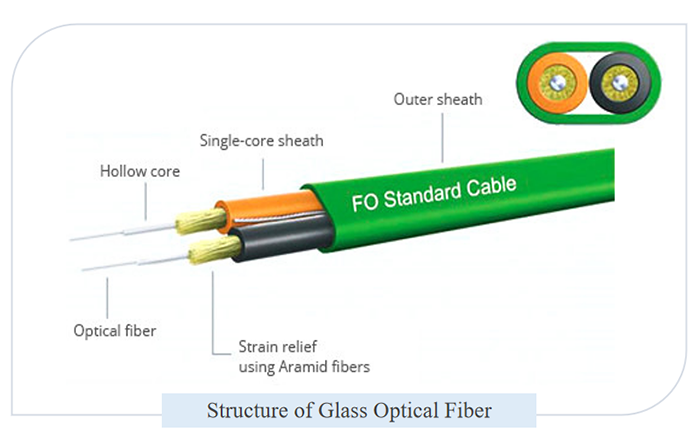
Single-mode and multimode SFP are two SFP transceiver types breakdown by the fiber optic cable worked with them. The single-mode SFP (SMF) refers to SFP that is used with single-mode fibers, while multimode SFP (MMF) means SFP optic that should be used together with multimode fiber patch cables.
Difference Between Single-Mode vs Multimode SFP
Singlemode SFP
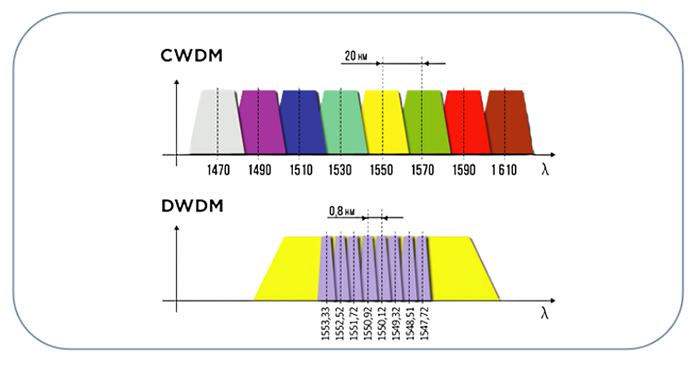
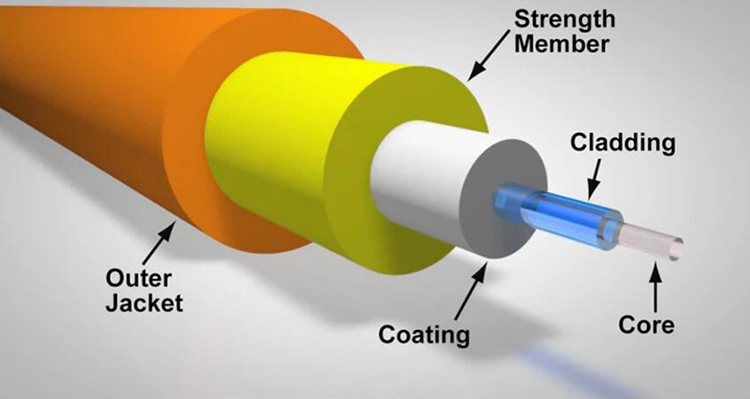
Singlemode fiber has much tighter tolerances for optics used. The core is smaller and the laser wavelength is narrower. This means that SMF has the capability to carry a higher bandwidth at much longer transmission distances. Singlemode SFPs work mainly in the 1310nm and 1550nm wavelengths and is mostly used in a long distances transmission environment reaching 2km, 10km, 40km, 60km, 80km and 120km.
Multi-mode SFP
Multi-mode fiber uses a much bigger core and usually uses a longer wavelength of light. Because of this, the optics used in Multi-mode have a higher capability to gather light from the laser. In practical terms, this means the optics are cheaper. The common Multi-mode SFPs work in 850nm wavelength and is only used for short distance transmission reaching 100m and 500m. Though it’s not able to transport for long distance, it can transport many kinds of optical signals.
Specifications & Functionalities
Single-Mode vs Multimode SFP Wavelength
The most central wavelength of multimode SFP is 850nm for short-range transmission. Also, some SFP designed for middle-distance (2km as typical) applications uses the 1310nm wavelength. The single-mode optical modules have a more flexible working central wavelength range, common in 1310nm and 1550nm.
Single-Mode vs Multimode SFP Distance
The application of the SFP module is linked with its working wavelength. As mentioned above, multimode SFP works mainly in 850nm wavelength, which is ideal for short-distance transmission. However, the max distance of the 850nm wavelength MMF SFP module varies with the data rates, ranging from 100m (eg. Cisco Compatible SFP-25G-SR-S, QSFP-100G-SR4-S), 150m (eg. Cisco Compatible QSFP-40G-SR4), 300m (such as Cisco Compatible SFP-10G-SR), 550m (eg. Cisco Compatible MGBSX1). Besides, some multimode SFP working in 1310nm wavelength can deliver data up to 20km.
Single-mode SFP can be divided into 10km, 20km, 40km, 80km, 100km, 120km, and more by distance. Taking 10G SFP+ as an example, Cisco Compatible SFP-10G-LR in 1310nm is for 10km, Cisco Compatible SFP-10G-ER in 1550nm is for 40km, and Cisco Compatible SFP-10G-ZR in 1550nm is for 80km. You can distinguish the max distance from the model name.
Single-Mode vs Multimode SFP Price
In general, buying a single-mode SFP costs more than a multimode SFP. As the manufacturing cost is different, mainly lying in the transmitter. Multimode SFP with VSCEL transmitter is cheaper than single-mode SFP with FP/DFB or even EML lasers. You can check the single-mode vs multimode SFP price on QSFPTEK Website.
Conclusion
Single-mode vs multimode SFP refers to SFP module type breakdown by the fiber optic cable worked with them. How to identify single-mode and multimode SFP? An easy and quick way is to distinguish the color of the SFP module Bale Clasp. SFP with black color-coded Bale Clasp stands for multimode SFP, while SFP Bale Clasp in blue, yellow, red refers to single-mode SFP. Other major differences between the two SFP module types are transmitter type, working central wavelength, max transmission distance, single-mode vs multimode SFP price, etc. For the topic of mixed-use of single-mode SFP with multimode fiber, it is feasible for urgent use but not reliable. For multimode SFP with single-mode fiber, remember not to do so, it is a matter of principle and technology. Finally, for achieving the best connection performance the author strongly recommends using single-mode SFP with single-mode fiber and multi-mode SFP with multimode fiber.