In the ever-evolving world of networking technology, the question of whether QSFP (Quad Small Form-factor Pluggable) modules can support 10G speeds is a pertinent one. As data demands surge and network infrastructures become increasingly complex, understanding the capabilities of different transceivers is essential for optimizing performance and future-proofing investments.
QSFP modules are widely recognized for their versatility and high-speed data transfer capabilities. To determine whether they can support 10G, it’s crucial to first understand what QSFP modules are and how they operate. QSFP modules are a type of optical transceiver used in data communication and telecommunications applications. They are designed to provide high-speed data transmission over various types of networks.
QSFP modules come in several varieties, each tailored for specific data rates and applications. The standard QSFP module, known as QSFP+, supports data rates of up to 40G. This is achieved through four independent channels, each capable of handling 10G data. This design allows for a total aggregate data rate of 40G, making QSFP+ an excellent choice for high-bandwidth applications like data centers and enterprise networks.
So, if we’re looking at a QSFP+ module, it’s clear that it supports 10G per channel, but it is designed to operate at a combined 40G throughput. This means that while each individual channel within a QSFP+ module can handle 10G, the module itself is optimized for a much higher data rate.
However, there’s also a range of QSFP modules that cater specifically to different speed requirements. For instance, the QSFP28 module is designed for 100G networks and can operate at 25G per channel. This advanced module represents a significant leap from the earlier QSFP+ standards and illustrates the progress in QSFP technology.
Given this background, the key takeaway is that QSFP modules are indeed capable of supporting 10G speeds, particularly in their QSFP+ configuration. The ability of QSFP+ modules to support 10G per channel underscores their flexibility and adaptability in various network environments.
Furthermore, QSFP modules are not just about speed; they are also about scalability and flexibility. With their modular design, QSFP transceivers can be easily swapped out or upgraded to meet changing network requirements. This modularity is particularly beneficial in environments where technology evolves rapidly, allowing for straightforward upgrades without a complete overhaul of existing infrastructure.
In summary, QSFP modules, especially QSFP+, are well-equipped to handle 10G speeds. Their design and capabilities make them a valuable asset in modern networking, providing the high performance needed for demanding applications while allowing for future scalability.
To fully appreciate how QSFP modules handle 10G speeds, it’s helpful to explore their practical applications and benefits in networking environments. The versatility of QSFP modules makes them a popular choice for various networking scenarios, including data centers, enterprise networks, and telecommunications.
In data centers, where high-speed data transfer is crucial, QSFP+ modules play a vital role. They facilitate rapid communication between servers, switches, and storage systems, ensuring that data flows smoothly and efficiently. For instance, in a data center environment where large volumes of data are continuously processed, the ability of QSFP+ to handle 10G per channel allows for seamless data transfers and minimal latency. This capability is essential for maintaining performance and reliability in high-demand situations.
In enterprise networks, QSFP modules offer significant advantages in terms of scalability. As organizations grow and their networking needs evolve, QSFP modules provide a flexible solution. For example, businesses that start with a 10G network infrastructure can easily upgrade to higher speeds by swapping out their QSFP+ modules for those supporting 40G or even 100G, without having to replace the entire network setup. This modular approach not only saves on costs but also minimizes disruption to ongoing operations.
The telecommunications industry also benefits from the use of QSFP modules. High-speed data transmission is essential for delivering services such as high-definition video streaming, cloud computing, and internet access. QSFP modules provide the necessary bandwidth and reliability to support these services, ensuring that telecommunications networks can meet the growing demands of consumers and businesses alike.
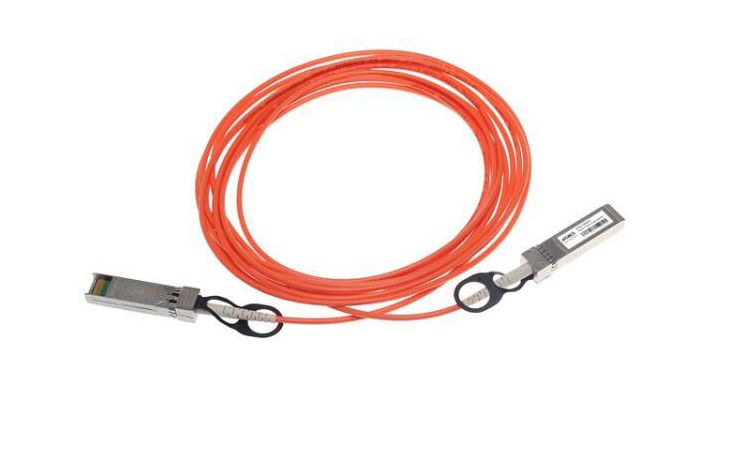
One of the key advantages of QSFP modules is their support for various types of media, including fiber optics and copper cables. This versatility allows for the integration of QSFP modules into different network architectures, whether for short-range connections within a data center or long-range links across metropolitan areas. The ability to use different types of cables and transceivers enhances the flexibility and adaptability of QSFP modules, making them a valuable tool in diverse networking scenarios.
Additionally, the ongoing development of QSFP technology continues to push the boundaries of what is possible. Emerging standards, such as QSFP-DD (Double Density) and OSFP (Octal Small Form-factor Pluggable), are designed to support even higher speeds and greater data rates. These advancements promise to further enhance the capabilities of QSFP modules, providing even more options for network operators and engineers.
In conclusion, QSFP modules, particularly the QSFP+ variant, are more than capable of supporting 10G speeds. Their design, flexibility, and scalability make them an essential component of modern networking infrastructure. Whether in data centers, enterprise networks, or telecommunications, QSFP modules offer the high performance and adaptability needed to meet current and future demands. As technology continues to advance, QSFP modules will remain a key player in the evolution of networking, ensuring that networks can keep pace with the ever-increasing need for speed and efficiency.
Table of Contents
ToggleFrequently Asked Questions
Q:Can 1G SFP work with 10G SFP
A:Yes, technically, a 1G SFP can physically fit into a 10G SFP port, but it will not work as intended. The mismatch in data rates will likely result in communication errors, link instability, and degraded network performance. Mixing different SFP speeds can lead to potential issues such as data packet loss, increased latency, and network congestion.
To address these issues when mixing 1G and 10G SFPs, it is recommended to use media converters or rate-selectable SFP modules that can adapt to different speeds. These devices can help bridge the gap between different SFP speeds and ensure compatibility within the network.
From a current perspective, with the advancement of technology and the widespread adoption of higher network speeds, it is becoming increasingly important to maintain uniformity in SFP speeds to optimize network performance and reliability. Therefore, it is advisable to avoid mixing 1G and 10G SFPs whenever possible to prevent potential compatibility issues and ensure seamless network operation.
Q:Do Walsun appliances support direct attach cable (DAC)?
A:Yes, Walsun appliances support a passive DAC in release 10.5 and later.
Q:Which port must I insert the DAC into?
A:DAC is inserted into the 10G port on the appliance.
Q:Does the 1G port support a DAC?
A:No. The DAC might fit into a 1G port but is not supported.
Q:How can I order a DAC?
A:Contact your Walsun sales representative to order a DAC.
Q:Can I mix DAC and fiber transceivers on the same appliance?
A:Yes. You can mix DAC and fiber transceivers on the same appliance. Each 10G port supports both options.
Q:Can I mix SFP+ fiber and DAC in ports that are part of the same link aggregation channel?
A:No. There must be symmetry between all elements in the same link aggregation channel.
Q:Which transceivers use the MPO type connector?
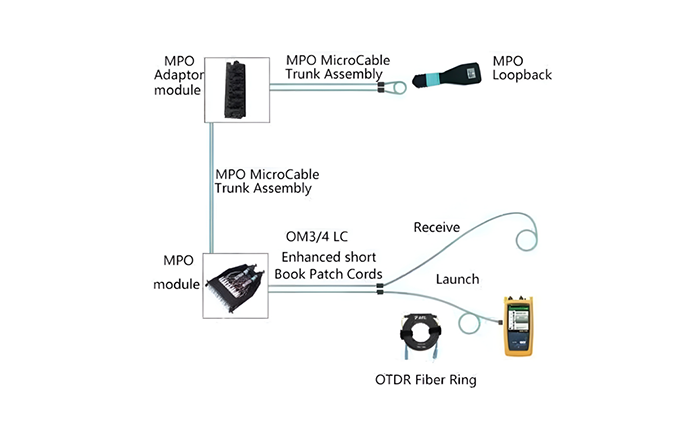
A:Only 40G QSFP+ SR4 transceiver and 100G QSFP28 SR4 transceivers use the MPO type connector. All other fiber transceivers use the LC type connector.
Q:Are special adapters required for 25G, 50G, and 100G ports?
A 100G port can support five speeds: 10G, 25G, 40G, 50G, and 100G. 1G speed is not supported on the 100G port. 50G and 100G ports use the same transceiver. The appliance determines the speed, and not the port.
Only 50G/100G (QSFP28) and 40G (QSFP+) transceivers can be directly used on a QSFP28 interface. Use a QSA28 adapter on a QSFP28 interface to use 10G (SFP+) and 25G (SFP28) transceivers.
Related Article:
SFP-CWGE27-80C 1.25G CWDM SFP 1270nm 80km LC SMF DDM Transceiver Module
TRENDnet TEG-MGBS10 Compatible 1000Base LX SFP 1310nm 10km LC SMF DDM Transceiver Module
SFP-GE35-2BX20 1000Base 2 Channels BX BIDI CSFP TX1310nm-RX1550nm 20km LC SMF DDM Transceiver Module
SFP-GE55-ZX 1000Base SFP ZX 1550nm 80km LC SMF DDM Transceiver Module
SFP-DWGE17-120C 1.25G DWDM SFP C17 100GHz 1563.86nm 120km LC SMF DDM Transceiver Module