Discover how single-mode fiber optics meet the demands of modern high-speed networking, including the capability to support 10Gbps data transmission. Explore the technology behind single-mode fiber and its role in achieving faster and more reliable network connections.
single-mode fiber, 10Gbps, fiber optics, network speed, data transmission, telecommunications
In the ever-evolving world of networking, speed is the ultimate benchmark for performance. As businesses and data centers continue to push the boundaries of what’s possible, the demand for high-speed data transmission is at an all-time high. Among the various types of fiber optic cables available, single-mode fiber stands out for its impressive capabilities. One of the most pressing questions that often arises is: Can single-mode fiber support 10Gbps data transmission? The answer is not only a resounding “yes,” but it also comes with a deeper understanding of how this technology achieves such feats.
Single-mode fiber optic cables are designed to carry signals over long distances with minimal loss and high fidelity. Unlike multi-mode fibers, which use a larger core to transmit multiple light modes simultaneously, single-mode fibers have a much smaller core—typically around 8 to 10 micrometers in diameter. This design allows them to guide light more efficiently, reducing signal attenuation and dispersion. These attributes make single-mode fiber an ideal candidate for high-speed and long-distance communications, including 10Gbps applications.
The ability of single-mode fiber to support 10Gbps data transmission is rooted in its fundamental properties. At such high speeds, the signal integrity must be preserved across various distances and through various types of media. Single-mode fiber excels in this regard due to its low attenuation and minimal modal dispersion. This means that the signal can travel longer distances without degradation, which is crucial for maintaining the quality of high-speed data transmission.
When considering the infrastructure for 10Gbps networks, single-mode fiber offers several advantages. For instance, it supports the use of Dense Wavelength Division Multiplexing (DWDM) technology, which allows multiple data streams to be transmitted simultaneously over the same fiber. This is achieved by assigning different wavelengths (or channels) to each data stream, effectively multiplying the capacity of a single fiber. With DWDM, single-mode fiber can easily handle the high data rates required for 10Gbps and beyond, making it a scalable solution for future-proofing network infrastructure.
Another important factor is the quality of the optical components used in conjunction with single-mode fiber. Optical transceivers, for example, play a critical role in converting electrical signals to optical signals and vice versa. For 10Gbps applications, transceivers are designed to operate efficiently with single-mode fiber, ensuring that the data transmitted over the fiber maintains its speed and accuracy. The compatibility between transceivers and single-mode fiber further enhances the overall performance of a 10Gbps network.
The implementation of single-mode fiber in 10Gbps networks is also supported by industry standards and advancements in technology. For example, the IEEE 802.3ae standard defines the specifications for 10 Gigabit Ethernet over fiber optics. This standard includes guidelines for using single-mode fiber to achieve reliable 10Gbps connectivity. Additionally, advancements in optical modulation formats and error correction technologies have further improved the capability of single-mode fiber to support high-speed data transmission.
In summary, single-mode fiber is more than capable of supporting 10Gbps data transmission. Its low attenuation, minimal modal dispersion, and compatibility with advanced technologies such as DWDM and high-performance transceivers make it a robust choice for high-speed networking. As we continue to push the envelope of data rates and network performance, single-mode fiber remains a key player in meeting the demands of modern telecommunications and data communications.
As we delve deeper into the realm of single-mode fiber and its ability to support 10Gbps data transmission, it’s crucial to explore the practical applications and benefits that this technology brings to the table. Single-mode fiber’s ability to handle such high speeds extends beyond theoretical capability; it plays a pivotal role in real-world scenarios across various industries.
One of the most prominent applications of single-mode fiber in 10Gbps networks is in data centers. Data centers are the backbone of modern digital infrastructure, supporting everything from cloud services to online applications. The demand for high-speed connectivity within these centers is immense, as they handle vast amounts of data and require seamless communication between servers, storage systems, and network switches. Single-mode fiber’s high bandwidth and low latency characteristics make it ideal for connecting different components within a data center, ensuring that data flows efficiently and without interruption.
Telecommunications companies also benefit greatly from single-mode fiber’s capabilities. In the telecommunications sector, the need for high-speed links between network nodes is critical. Single-mode fiber enables these companies to provide faster internet services, support high-definition video streaming, and deliver other bandwidth-intensive applications to consumers and businesses. By using single-mode fiber for long-haul connections, telecom operators can maintain high service quality over vast distances, making it a cornerstone of their network infrastructure.
In addition to data centers and telecommunications, single-mode fiber is also instrumental in supporting high-speed connections for enterprise networks. Businesses that require rapid data transfer, such as financial institutions or research organizations, rely on the robust performance of single-mode fiber to maintain operational efficiency. These enterprises use 10Gbps connections to handle large datasets, perform real-time analysis, and ensure quick access to critical information. The reliability and speed of single-mode fiber are essential for these applications, highlighting its importance in the corporate world.
Moreover, the versatility of single-mode fiber extends to various types of installations. Whether it’s for underground cabling, aerial installations, or within buildings, single-mode fiber can be adapted to different environments and requirements. Its durability and ability to handle high speeds without signal degradation make it a preferred choice for both urban and rural deployments.
Another key benefit of single-mode fiber is its future-proof nature. As technology advances and data demands continue to grow, single-mode fiber’s scalability becomes increasingly valuable. The fiber itself can support even higher speeds than 10Gbps with the appropriate equipment and technologies. This means that investing in single-mode fiber infrastructure is not just a solution for today but also a step towards accommodating future advancements in network speeds.
However, it’s worth noting that while single-mode fiber offers remarkable capabilities, its installation and maintenance do come with considerations. Single-mode fiber requires precise alignment and careful handling to avoid signal loss and performance issues. Additionally, the cost of installation and the need for specialized equipment can be higher compared to multi-mode fiber. Nevertheless, the long-term benefits and performance advantages often outweigh these initial challenges, making single-mode fiber a worthwhile investment for high-speed applications.
In conclusion, single-mode fiber’s ability to support 10Gbps data transmission is a testament to its advanced technology and efficiency. From data centers to telecommunications and enterprise networks, single-mode fiber provides a reliable and high-performance solution for modern connectivity needs. Its capability to handle high-speed data transfers, coupled with its scalability and future-proof nature, underscores its significance in the ever-evolving landscape of networking. As we look to the future of high-speed communication, single-mode fiber will undoubtedly continue to play a crucial role in shaping the next generation of data transmission technology.
Table of Contents
ToggleFrequently Asked Questions
Q:Can 1G SFP work with 10G SFP
A:Yes, technically, a 1G SFP can physically fit into a 10G SFP port, but it will not work as intended. The mismatch in data rates will likely result in communication errors, link instability, and degraded network performance. Mixing different SFP speeds can lead to potential issues such as data packet loss, increased latency, and network congestion.
To address these issues when mixing 1G and 10G SFPs, it is recommended to use media converters or rate-selectable SFP modules that can adapt to different speeds. These devices can help bridge the gap between different SFP speeds and ensure compatibility within the network.
From a current perspective, with the advancement of technology and the widespread adoption of higher network speeds, it is becoming increasingly important to maintain uniformity in SFP speeds to optimize network performance and reliability. Therefore, it is advisable to avoid mixing 1G and 10G SFPs whenever possible to prevent potential compatibility issues and ensure seamless network operation.
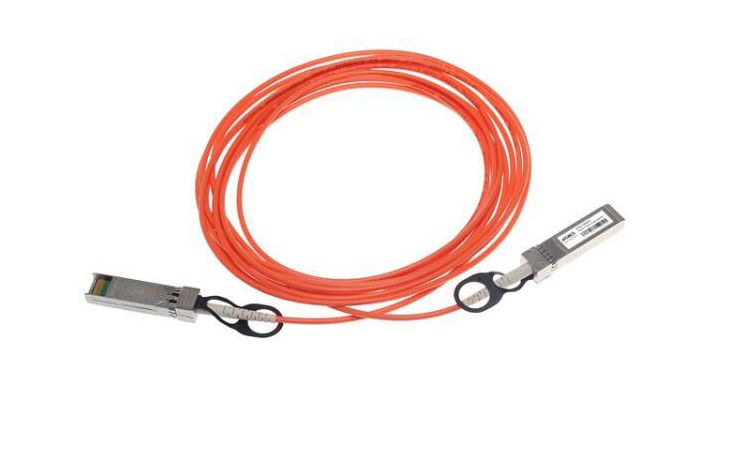
Q:Do Walsun appliances support direct attach cable (DAC)?
A:Yes, Walsun appliances support a passive DAC in release 10.5 and later.
Q:Which port must I insert the DAC into?
A:DAC is inserted into the 10G port on the appliance.
Q:Does the 1G port support a DAC?
A:No. The DAC might fit into a 1G port but is not supported.
Q:How can I order a DAC?
A:Contact your Walsun sales representative to order a DAC.
Q:Can I mix DAC and fiber transceivers on the same appliance?
A:Yes. You can mix DAC and fiber transceivers on the same appliance. Each 10G port supports both options.
Q:Can I mix SFP+ fiber and DAC in ports that are part of the same link aggregation channel?
A:No. There must be symmetry between all elements in the same link aggregation channel.
Q:Which transceivers use the MPO type connector?
A:Only 40G QSFP+ SR4 transceiver and 100G QSFP28 SR4 transceivers use the MPO type connector. All other fiber transceivers use the LC type connector.
Q:Are special adapters required for 25G, 50G, and 100G ports?
A 100G port can support five speeds: 10G, 25G, 40G, 50G, and 100G. 1G speed is not supported on the 100G port. 50G and 100G ports use the same transceiver. The appliance determines the speed, and not the port.
Only 50G/100G (QSFP28) and 40G (QSFP+) transceivers can be directly used on a QSFP28 interface. Use a QSA28 adapter on a QSFP28 interface to use 10G (SFP+) and 25G (SFP28) transceivers.
Related Article:
SFP-CWGE27-80C 1.25G CWDM SFP 1270nm 80km LC SMF DDM Transceiver Module
TRENDnet TEG-MGBS10 Compatible 1000Base LX SFP 1310nm 10km LC SMF DDM Transceiver Module
SFP-GE35-2BX20 1000Base 2 Channels BX BIDI CSFP TX1310nm-RX1550nm 20km LC SMF DDM Transceiver Module
SFP-GE55-ZX 1000Base SFP ZX 1550nm 80km LC SMF DDM Transceiver Module
SFP-DWGE17-120C 1.25G DWDM SFP C17 100GHz 1563.86nm 120km LC SMF DDM Transceiver Module