

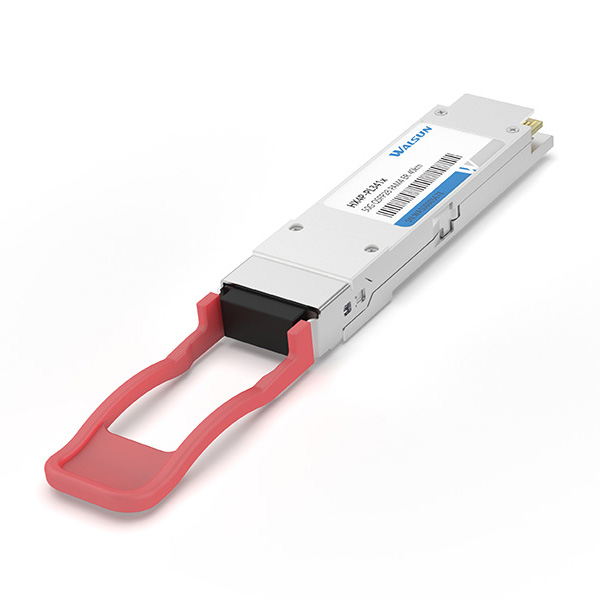
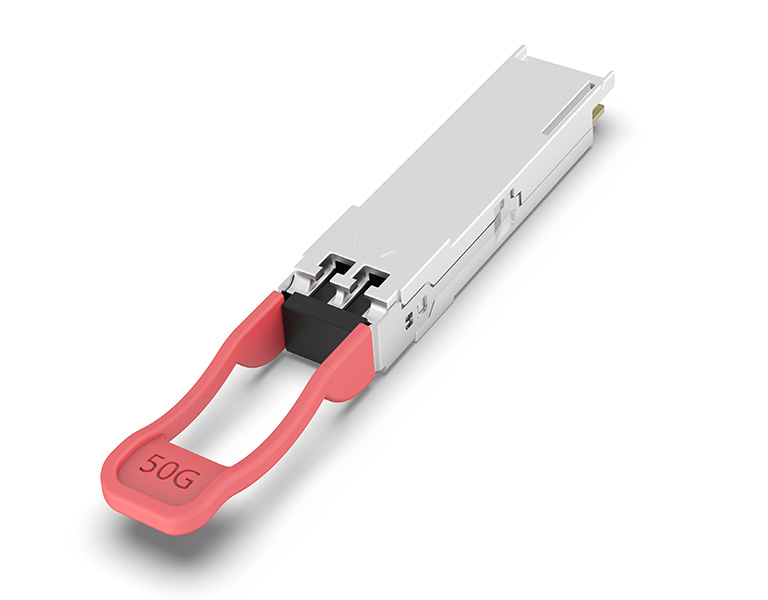
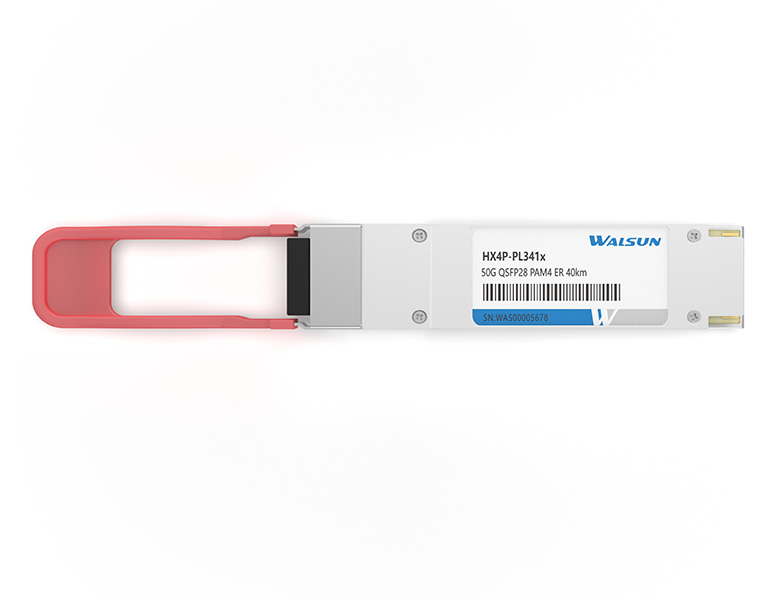
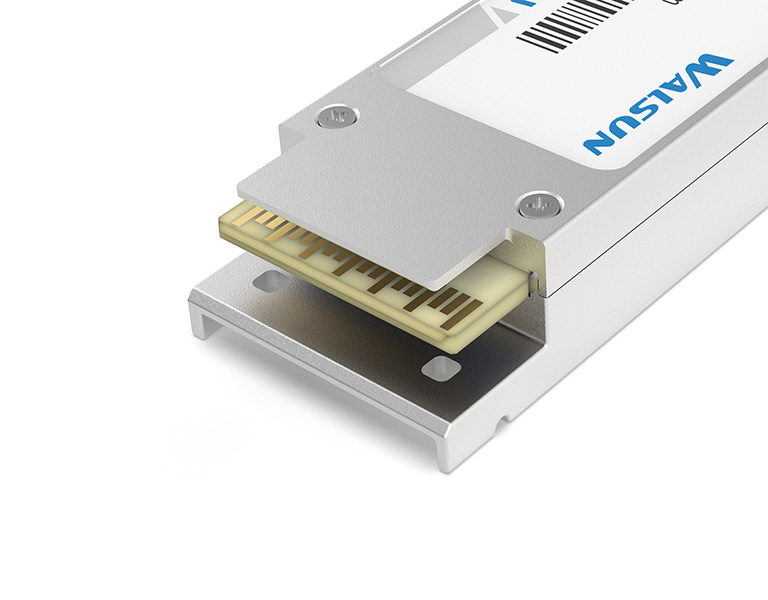
50G QSFP28 PAM4 ER 1310nm 40km
- Utilizing hot-pluggable QSFP28 packaging
- Full duplex integrated transceiver module
- DFB transmitter and PIN receiver
- Compliant with IEEE 802.3cd, SFF-8636, SFF-8679, and QSFP28 MSA Ethernet standards
- Maximum power consumption less than 4.0W
- Built-in Digital Diagnostic Monitoring (DDM)
- Power supply voltage 3.3V
- Compliant with RoHS environmental standards (lead-free)
- Class 1/1M compliant product, meets IEC60825-1 requirements
- Compliant with Telcordia (Bellcore) GR-468-CORE reliability requirements
- Meets EMI and ESD requirements
Warranty : 30-Day Free Return, 3-Year Free Replacement, 5-Year Warranty, Lifetime After-sales Technical Support.
| Product Model | QSFP28-50G-LR | Vendor Name | Walsun |
| Form Factor | QSFP28 | Data Rate | 53.2Gbps |
| Wavelength | 1310nm | Distance | 10km |
| Connector | LC Duplex | Cable Type | SMF |
| Transmitter Type | DFB | Detector Types | PIN |
| TX Power | -4~4.2dBm | Receiver Sensitivity | < -8.8dBm |
| Power Consumption | ≤4.0W | Operation Temperature | 0~70°C |
| DDM | Support | EMC | Support |
| Protocols | IEEE 802.3cd, SFF-8636, SFF-8679, QSFP28 MSA, CPRI, eCPRI | ||
Q: What are the main types of 50G QSFP28 optical modules?
A: There are several main types, including 50GBase-SR (multimode short distance), 50GBase-LR4 (single-mode long distance), 50GBase-ER4 (enhanced long distance), 50GBase-CWDM4 (coarse wavelength division multiplexing), and 50GBase-PAM4 (4-level pulse amplitude modulation).
Q: What is the applicable distance range of 50G QSFP28 optical modules?
A: It varies by type. For instance, 50GBase-SR is suitable for multimode fiber with a transmission distance of approximately 100-150 meters. 50GBase-LR can reach up to 10 kilometers over single-mode fiber, while 50GBase-ER can extend up to 40 kilometers. Specific distances depend on the module specifications.
Q: What is the power consumption of 50G QSFP28 optical modules?
A: Generally less than 3.5 watts. Specific power consumption may vary depending on module design and manufacturer, but tends to be low-power to meet energy efficiency requirements in data centers.
Q: What are the interface types of 50G QSFP28 optical modules?
A: Typically, MPO interfaces are used for multimode types, while LC interfaces are used for single-mode types. Specific interface types depend on the design of the optical module.
Q: What are the differences between 50G QSFP28 and QSFP+ optical modules?
A: The main difference lies in data rates, with 50G supporting 50Gbps compared to 40Gbps for QSFP+. Additionally, QSFP28 packaging is smaller and more suitable for high-density applications. QSFP28 also supports more advanced modulation technologies such as PAM4.
Q: What is the PAM4 technology of 50G QSFP28 optical modules?
A: PAM4 technology refers to pulse amplitude modulation with 4 levels, allowing transmission of 4 signal levels per clock cycle, thus achieving higher data rates on a single channel. It is a key technology for achieving 50Gbps speeds.
Q: What are the hot-swappable features of 50G QSFP28 optical modules?
A: Supporting hot-swapping means modules can be replaced without shutting down the system, improving maintenance flexibility and system availability.
Related products
-
 40G Transceivers
40G QSFP+ ZR4 80km
-
 40G Transceivers
40G QSFP+ BIDI ZR4 80km
-
 40G Transceivers
40G QSFP+ LR4 10km
-
 50G QSFP28
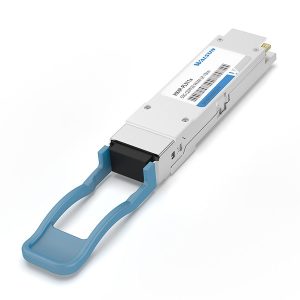
50G QSFP28 PAM4 LR 1310nm10km