To determine if your SFP (Small Form-factor Pluggable) module is single mode or multimode, you can look for specific markings or labels on the module itself. Typically, single mode SFP modules are labeled as “SM” or “single mode,” while multimode modules may be labeled as “MM” or “multimode.” Additionally, single mode modules often have yellow-colored connectors, while multimode modules may have orange or aqua-colored connectors. It is important to check the specifications or documentation provided by the manufacturer to confirm the mode of your SFP module, as the labeling and color coding conventions may vary.
Check the labeling or product specifications of the SFP module.
To determine whether your SFP (Small Form-factor Pluggable) module is single mode or multimode, you can follow a few steps. First, check the labeling or product specifications of the SFP module. Most manufacturers clearly indicate whether the module is single mode or multimode on the label or in the product description. Look for terms like “SM” for single mode or “MM” for multimode. Additionally, the product specifications should provide information about the fiber type supported by the SFP module.
If the labeling or product specifications are unclear or unavailable, you can visually inspect the SFP module. Single mode and multimode SFP modules have different physical characteristics. Single mode SFP modules typically have a longer transmission distance and use a narrower core diameter fiber, usually 9 microns. Multimode SFP modules, on the other hand, have a shorter transmission distance and use a larger core diameter fiber, usually 50 or 62.5 microns.
However, it is important to note that with the advancement of technology, some SFP modules support both single mode and multimode fibers. These modules are known as “dual-mode” or “universal” SFPs. They can automatically detect the type of fiber being used and adjust accordingly. If you have a dual-mode SFP module, it may not be immediately obvious whether it is single mode or multimode. In such cases, referring to the product specifications or contacting the manufacturer for clarification is the best course of action.
In summary, to determine if your SFP module is single mode or multimode, check the labeling or product specifications first. If that information is not available, visually inspect the module for physical characteristics. And if you are uncertain, consult the manufacturer for clarification.
Contact a professional or expert in the field for assistance.
To determine whether your SFP (Small Form-factor Pluggable) module is single mode or multimode, there are a few methods you can try. However, it is important to note that these methods may not always be foolproof, and contacting a professional or expert in the field is always recommended for accurate identification.
Label or Markings:
- Look for any text or labeling on the SFP module itself.
- Single-mode (SM) modules are often labeled with “SM,” “SMF,” “LX,” “LR,” “ZX,” or “OS1/OS2.”
- Multimode (MM) modules may be labeled with “MM,” “MMF,” “SX,” “SR,” “OM3,” or “OM4.”
Color Coding:
- Single-mode SFPs typically have a blue or yellow pull tab or a blue housing.
- Multimode SFPs usually have a beige, black, or aqua pull tab or an aqua housing.
Wavelength Information:
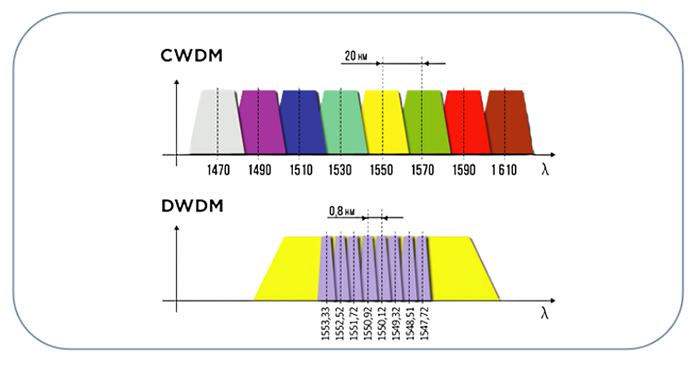
- Single-mode SFPs often operate at wavelengths like 1310 nm or 1550 nm.
- Multimode SFPs typically operate at 850 nm or 1310 nm.
Connector Types:
- While LC connectors are common for both SM and MM, older MM systems might use ST or SC connectors.
Part Number and Datasheet:
- The part number on the SFP module can be cross-referenced with the manufacturer’s datasheet or website to find detailed specifications, including whether the module is SM or MM.
Distance Capabilities:
- Single-mode SFPs are designed for longer distances (up to 100 km or more), making them suitable for long-haul applications.
- Multimode SFPs are generally used for shorter distances (up to 2 km) and are common in data center and enterprise LAN environments.
Physical Inspection and Documentation:
- If the SFP module came with any packaging or documentation, these materials should specify whether it’s designed for single-mode or multimode fiber.