In the rapidly evolving landscape of networking technology, SFP (Small Form-factor Pluggable) ports have emerged as a game-changer, providing unparalleled flexibility and efficiency. These small yet powerful connectors play a crucial role in the transmission of data, offering adaptability across a wide range of networking environments. A frequently asked question in the realm of network infrastructure is: Are SFP ports bidirectional?
To fully appreciate the versatility of SFP ports, it’s essential to understand their fundamental design and functionality. SFP modules, often referred to as mini-GBICs (Gigabit Interface Converters), are hot-swappable devices used to interface with network hardware such as switches and routers. These modules are designed to support a variety of communication standards, including Ethernet, Fiber Channel, and SONET, making them indispensable in modern networking.
Table of Contents
ToggleThe Bidirectional Nature of SFP Ports: An Overview
At the heart of the discussion about SFP ports’ bidirectionality is their ability to send and receive data simultaneously over the same physical link. This feature, known as bidirectional (BiDi) communication, is particularly valuable in environments where maximizing the use of existing infrastructure is critical. Traditional fiber optic communication typically requires two fibers: one for transmitting data and another for receiving. However, bidirectional SFP modules enable both functions over a single fiber, effectively doubling the efficiency of the network.
Technical Insights into BiDi SFP Modules
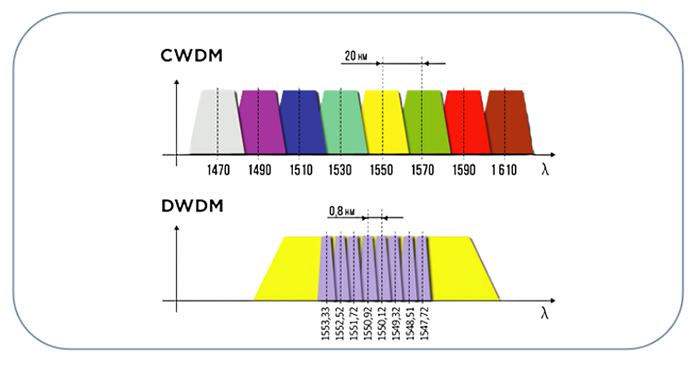
Bidirectional SFP modules achieve this remarkable feat through the use of wavelength-division multiplexing (WDM) technology. By operating on two different wavelengths, one for upstream and another for downstream traffic, BiDi SFPs can carry out bidirectional communication over a single fiber. For instance, a common configuration might use 1310nm for transmission and 1550nm for reception.
The implementation of WDM in SFP modules involves precise engineering to ensure that signals do not interfere with each other. Optical filters within the module separate the wavelengths, allowing seamless data flow in both directions. This capability is not only a technical marvel but also a cost-effective solution for expanding network capacity without the need for additional fiber infrastructure.
Advantages of Bidirectional SFP Ports
Cost Efficiency: By utilizing existing fiber infrastructure more effectively, bidirectional SFP modules reduce the need for additional fiber runs, leading to significant cost savings in both installation and maintenance.
Simplified Network Design: With fewer fibers to manage, network design becomes simpler and more streamlined. This reduction in complexity can lead to easier troubleshooting and lower chances of errors during installation.
Enhanced Scalability: As networks grow, the ability to add capacity without major infrastructure changes is invaluable. BiDi SFPs provide a scalable solution that can easily adapt to increasing data demands.
Improved Performance: The efficient use of fiber resources can enhance overall network performance, providing faster data transfer rates and more reliable connections.
Applications of Bidirectional SFP Ports
Bidirectional SFP modules are widely used across various sectors, from telecommunications to enterprise networking. In metropolitan area networks (MANs) and data centers, where space and resources are at a premium, the ability to maximize fiber usage is particularly advantageous. Additionally, service providers leverage BiDi SFPs to deliver high-speed internet services over existing fiber-to-the-home (FTTH) infrastructures, optimizing their investments and improving service delivery.
Challenges and Considerations
While the benefits of bidirectional SFP modules are substantial, there are also challenges to consider. The need for precise wavelength management means that network administrators must carefully plan and configure their systems to avoid signal interference. Additionally, compatibility with existing equipment and future scalability should be evaluated to ensure seamless integration and long-term viability.
Continuing our exploration of the bidirectional capabilities of SFP ports, it’s essential to delve deeper into the practical aspects and future potential of this technology. The landscape of networking is continuously evolving, and SFP ports, with their bidirectional prowess, are poised to play a significant role in shaping the future of data communication.
Real-World Implementations and Success Stories
One of the most compelling ways to understand the impact of bidirectional SFP ports is through real-world implementations. Across various industries, organizations have leveraged BiDi SFPs to enhance their network infrastructure and achieve remarkable results.
In the healthcare sector, for instance, hospitals and medical centers require robust and reliable networks to support critical applications such as electronic medical records (EMRs), telemedicine, and medical imaging. By integrating bidirectional SFP modules, these institutions have managed to upgrade their network capabilities without disrupting their operations or incurring excessive costs. The result is a more efficient and responsive healthcare system, capable of delivering better patient care.
Similarly, in the education sector, universities and research institutions have embraced bidirectional SFP technology to support their growing bandwidth needs. With the proliferation of online learning, video conferencing, and data-intensive research projects, the demand for high-speed and reliable network connections has never been greater. By deploying BiDi SFPs, these institutions have managed to scale their networks efficiently, ensuring that students and faculty have uninterrupted access to the resources they need.
Future Trends and Innovations
As we look to the future, the potential for bidirectional SFP ports continues to expand. Emerging technologies such as 5G, the Internet of Things (IoT), and edge computing are driving the need for more sophisticated and adaptable network solutions. SFP ports, with their inherent flexibility and bidirectional capabilities, are well-positioned to meet these demands.
One of the exciting developments on the horizon is the integration of advanced WDM techniques with bidirectional SFP modules. By leveraging even more precise wavelength management, future BiDi SFPs could offer even higher data transfer rates and greater efficiency. This would be particularly beneficial in high-density environments such as data centers, where maximizing every bit of available bandwidth is crucial.
Moreover, the growing emphasis on sustainability and green technology is likely to influence the evolution of SFP ports. As organizations strive to reduce their carbon footprint and energy consumption, the efficient use of existing fiber infrastructure provided by bidirectional SFP modules will become increasingly attractive. This aligns with broader trends in the industry towards more eco-friendly and cost-effective networking solutions.
Conclusion: Embracing the Power of Bidirectional SFP Ports
In conclusion, the question “Are SFP ports bidirectional?” opens up a fascinating exploration of one of the most versatile and impactful components in modern networking. Bidirectional SFP modules offer a powerful solution for maximizing fiber optic infrastructure, providing significant cost savings, simplified network design, and enhanced scalability.
From healthcare to education and beyond, the real-world applications of BiDi SFPs demonstrate their value across diverse sectors. As technology continues to evolve, the bidirectional capabilities of SFP ports will undoubtedly play a critical role in shaping the future of data communication.
By embracing this technology, organizations can position themselves at the forefront of innovation, ready to meet the growing demands of an interconnected world. Whether upgrading existing networks or designing new infrastructure, the bidirectional potential of SFP ports offers a pathway to a more efficient, scalable, and sustainable future in networking.
Frequently Asked Questions
Q:Can 1G SFP work with 10G SFP
A:Yes, technically, a 1G SFP can physically fit into a 10G SFP port, but it will not work as intended. The mismatch in data rates will likely result in communication errors, link instability, and degraded network performance. Mixing different SFP speeds can lead to potential issues such as data packet loss, increased latency, and network congestion.
To address these issues when mixing 1G and 10G SFPs, it is recommended to use media converters or rate-selectable SFP modules that can adapt to different speeds. These devices can help bridge the gap between different SFP speeds and ensure compatibility within the network.
From a current perspective, with the advancement of technology and the widespread adoption of higher network speeds, it is becoming increasingly important to maintain uniformity in SFP speeds to optimize network performance and reliability. Therefore, it is advisable to avoid mixing 1G and 10G SFPs whenever possible to prevent potential compatibility issues and ensure seamless network operation.
Q:Do Walsun appliances support direct attach cable (DAC)?
A:Yes, Walsun appliances support a passive DAC in release 10.5 and later.
Q:Which port must I insert the DAC into?
A:DAC is inserted into the 10G port on the appliance.
Q:Does the 1G port support a DAC?
A:No. The DAC might fit into a 1G port but is not supported.
Q:How can I order a DAC?
A:Contact your Walsun sales representative to order a DAC.
Q:Can I mix DAC and fiber transceivers on the same appliance?
A:Yes. You can mix DAC and fiber transceivers on the same appliance. Each 10G port supports both options.
Q:Can I mix SFP+ fiber and DAC in ports that are part of the same link aggregation channel?
A:No. There must be symmetry between all elements in the same link aggregation channel.
Q:Which transceivers use the MPO type connector?
A:Only 40G QSFP+ SR4 transceiver and 100G QSFP28 SR4 transceivers use the MPO type connector. All other fiber transceivers use the LC type connector.
Q:Are special adapters required for 25G, 50G, and 100G ports?
A 100G port can support five speeds: 10G, 25G, 40G, 50G, and 100G. 1G speed is not supported on the 100G port. 50G and 100G ports use the same transceiver. The appliance determines the speed, and not the port.
Only 50G/100G (QSFP28) and 40G (QSFP+) transceivers can be directly used on a QSFP28 interface. Use a QSA28 adapter on a QSFP28 interface to use 10G (SFP+) and 25G (SFP28) transceivers.