In the ever-evolving landscape of network technology, the quest for higher speeds, better performance, and seamless compatibility never ends. One of the common questions network administrators and enthusiasts often grapple with is: “Can you use an SFP+ cable in an SFP port?” To answer this, we need to dive deep into the world of SFP (Small Form-factor Pluggable) and SFP+ technologies, their similarities, differences, and the implications of interchanging them in a network setup.
Understanding SFP and SFP+ Technologies
Before we address the compatibility question, it’s crucial to understand what SFP and SFP+ technologies are. SFP, or Small Form-factor Pluggable, is a compact, hot-swappable transceiver used for both telecommunication and data communication applications. It supports speeds up to 1 Gbps (Gigabit per second). SFP modules can transmit data over both fiber optic and copper cables, depending on the type of SFP module used.
On the other hand, SFP+ is an enhanced version of SFP. It supports higher data rates up to 10 Gbps and has improved signal integrity and performance capabilities. SFP+ transceivers are also backward compatible with SFP ports, but this is where the waters start to get murky.
The Physical Compatibility
Physically, SFP and SFP+ modules are identical in size and shape. This means that an SFP+ transceiver can fit into an SFP port without any issues. The real question, however, lies in whether it can function properly once plugged in.
The Electrical and Protocol Considerations
While the physical form factor of SFP and SFP+ is the same, the electrical specifications and protocols they operate under differ. SFP+ transceivers are designed to handle higher bandwidth and more complex data transmission protocols compared to their SFP counterparts.
Using an SFP+ transceiver in an SFP port may not leverage the full potential of the SFP+ technology. The port’s design to support only up to 1 Gbps means the SFP+ transceiver will operate at reduced speeds. Essentially, you will not be taking advantage of the 10 Gbps capability of the SFP+ module, rendering the investment in SFP+ hardware somewhat redundant if only SFP ports are available.
Compatibility Issues and Manufacturer Specifications
It’s essential to consult the hardware manufacturer’s specifications when considering mixing SFP and SFP+ components. While many manufacturers ensure backward compatibility, there might be exceptions or specific configurations needed to make it work seamlessly. Firmware updates or specific drivers may be required to support mixed usage, ensuring optimal performance and avoiding potential data transmission errors or hardware malfunctions.
Practical Scenarios and Real-World Applications
In practical terms, using an SFP+ cable in an SFP port is often dictated by specific network requirements and existing infrastructure. For instance, in a network where most of the ports are SFP, but a few devices need to connect at higher speeds, using an SFP+ cable could be a temporary solution. However, this should ideally be a short-term measure while planning a more comprehensive upgrade to SFP+ infrastructure.
Cost Considerations
Cost is another critical factor. SFP+ modules are generally more expensive than SFP modules. If your current network only supports SFP, investing in SFP+ modules without planning a broader upgrade may not be cost-effective. Conversely, if future-proofing your network is a priority, investing in SFP+ infrastructure could be justified, even if immediate benefits are not fully realized due to current limitations.
The Role of DAC Cables
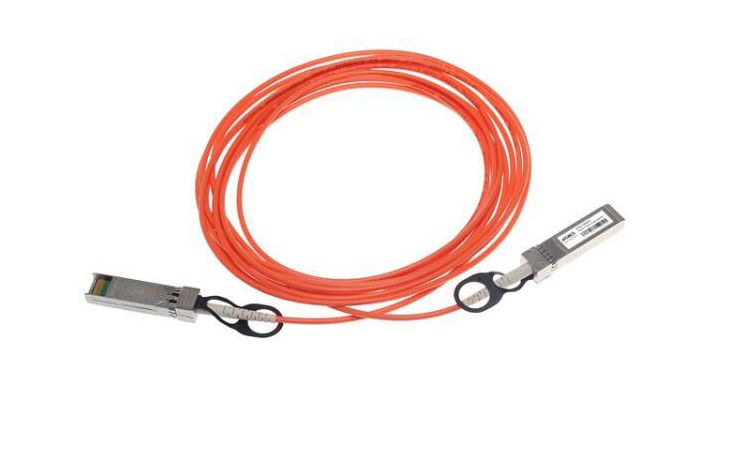
Direct Attach Copper (DAC) cables are often used in SFP+ environments due to their cost-effectiveness and reliability for short-distance connections. DAC cables can also be used with SFP ports, but again, the speed will be limited to the capabilities of the SFP port. If upgrading to SFP+ infrastructure, DAC cables designed for SFP+ can be a good investment, given their backward compatibility with SFP.
Planning for the Future
When planning your network infrastructure, it’s crucial to consider both current and future needs. If you anticipate needing higher bandwidth in the near future, investing in SFP+ capable devices and transceivers might be wise, even if your current setup only utilizes SFP ports. This way, as your network demands grow, the transition to higher speeds will be smoother and more cost-effective in the long run.
Conclusion
So, can you use an SFP+ cable in an SFP port? The answer is yes, but with limitations. While they are physically compatible and can function together, the SFP+ transceiver will not perform at its full potential due to the bandwidth constraints of the SFP port. It’s essential to weigh the pros and cons, considering factors such as cost, current network capabilities, future growth, and manufacturer specifications.
Understanding these nuances can help network administrators make informed decisions, ensuring their network infrastructure is both efficient and scalable. Whether you’re managing a small office network or a large data center, the key lies in strategic planning and staying abreast of technological advancements to maintain a robust and future-ready network environment.
In summary, while using an SFP+ cable in an SFP port is possible, it’s a decision that should be made with careful consideration of the specific requirements and long-term goals of your network infrastructure.
Frequently Asked Questions
Q:Can 1G SFP work with 10G SFP
A:Yes, technically, a 1G SFP can physically fit into a 10G SFP port, but it will not work as intended. The mismatch in data rates will likely result in communication errors, link instability, and degraded network performance. Mixing different SFP speeds can lead to potential issues such as data packet loss, increased latency, and network congestion.
To address these issues when mixing 1G and 10G SFPs, it is recommended to use media converters or rate-selectable SFP modules that can adapt to different speeds. These devices can help bridge the gap between different SFP speeds and ensure compatibility within the network.
From a current perspective, with the advancement of technology and the widespread adoption of higher network speeds, it is becoming increasingly important to maintain uniformity in SFP speeds to optimize network performance and reliability. Therefore, it is advisable to avoid mixing 1G and 10G SFPs whenever possible to prevent potential compatibility issues and ensure seamless network operation.
Q:Do Walsun appliances support direct attach cable (DAC)?
A:Yes, Walsun appliances support a passive DAC in release 10.5 and later.
Q:Which port must I insert the DAC into?
A:DAC is inserted into the 10G port on the appliance.
Q:Does the 1G port support a DAC?
A:No. The DAC might fit into a 1G port but is not supported.
Q:How can I order a DAC?
A:Contact your Walsun sales representative to order a DAC.
Q:Can I mix DAC and fiber transceivers on the same appliance?
A:Yes. You can mix DAC and fiber transceivers on the same appliance. Each 10G port supports both options.
Q:Can I mix SFP+ fiber and DAC in ports that are part of the same link aggregation channel?
A:No. There must be symmetry between all elements in the same link aggregation channel.
Q:Which transceivers use the MPO type connector?
A:Only 40G QSFP+ SR4 transceiver and 100G QSFP28 SR4 transceivers use the MPO type connector. All other fiber transceivers use the LC type connector.
Q:Are special adapters required for 25G, 50G, and 100G ports?
A 100G port can support five speeds: 10G, 25G, 40G, 50G, and 100G. 1G speed is not supported on the 100G port. 50G and 100G ports use the same transceiver. The appliance determines the speed, and not the port.
Only 50G/100G (QSFP28) and 40G (QSFP+) transceivers can be directly used on a QSFP28 interface. Use a QSA28 adapter on a QSFP28 interface to use 10G (SFP+) and 25G (SFP28) transceivers.
Related Article:
SFP-CWGE27-80C 1.25G CWDM SFP 1270nm 80km LC SMF DDM Transceiver Module
TRENDnet TEG-MGBS10 Compatible 1000Base LX SFP 1310nm 10km LC SMF DDM Transceiver Module
SFP-GE35-2BX20 1000Base 2 Channels BX BIDI CSFP TX1310nm-RX1550nm 20km LC SMF DDM Transceiver Module
SFP-GE55-ZX 1000Base SFP ZX 1550nm 80km LC SMF DDM Transceiver Module
SFP-DWGE17-120C 1.25G DWDM SFP C17 100GHz 1563.86nm 120km LC SMF DDM Transceiver Module