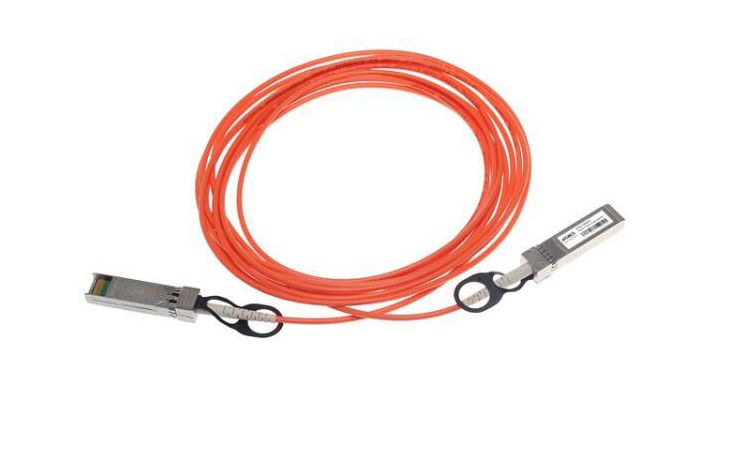
In the rapidly evolving world of networking technology, staying ahead of the curve often involves navigating a labyrinth of acronyms, standards, and hardware specifications. One question that frequently arises in this context is: “Can you put an SFP module in an SFP+ slot?” This query, while seemingly straightforward, opens up a wealth of discussion about compatibility, performance, and future-proofing your network infrastructure.
To begin with, it’s essential to understand what SFP and SFP+ are. SFP stands for Small Form-factor Pluggable, a compact, hot-swappable transceiver used for both telecommunication and data communications applications. SFP modules support speeds up to 1 Gbps, making them suitable for Gigabit Ethernet and Fiber Channel applications.
On the other hand, SFP+ (Enhanced Small Form-factor Pluggable) is an advancement over SFP, supporting data rates up to 10 Gbps. SFP+ modules are primarily used in 10 Gigabit Ethernet and 8G Fiber Channel networks. Despite their similar physical form factor, the performance capabilities of SFP and SFP+ are quite different.
So, can you put an SFP module in an SFP+ slot? The short answer is yes. SFP+ ports are designed to be backward compatible with SFP modules. This means you can insert an SFP transceiver into an SFP+ slot, and it will function correctly, albeit at the lower data rate supported by the SFP module. This backward compatibility offers significant flexibility, allowing network administrators to leverage existing SFP modules even when upgrading to SFP+ capable infrastructure.
However, it’s crucial to understand the limitations and implications of this compatibility. While the SFP module will work in an SFP+ slot, it will only operate at its maximum capability of 1 Gbps. This can be a significant bottleneck if the rest of your network is designed to support 10 Gbps speeds. In scenarios where maximum bandwidth and performance are critical, relying on SFP modules in SFP+ slots might not be the best solution.
Moreover, the decision to use SFP modules in SFP+ slots should be informed by the specific needs and goals of your network. For example, in a mixed environment where both 1 Gbps and 10 Gbps devices coexist, the ability to use SFP modules in SFP+ slots can provide a seamless upgrade path and facilitate incremental network upgrades. It allows for a gradual transition without the immediate need for a complete overhaul of your network infrastructure.
Another consideration is cost. SFP modules are generally less expensive than SFP+ modules. If budget constraints are a significant factor, utilizing existing SFP modules in SFP+ slots can be a cost-effective strategy for expanding or upgrading your network. This approach can help manage expenses while still benefiting from the enhanced capabilities of newer hardware where necessary.
Additionally, it’s important to factor in the future growth and scalability of your network. While using SFP modules in SFP+ slots can provide short-term savings and flexibility, it’s essential to plan for future bandwidth requirements. As data consumption and network demands continue to grow, the need for higher speeds and greater capacity will become more pressing. Investing in SFP+ modules from the outset might offer better long-term value and performance, ensuring that your network can handle future demands without frequent upgrades.
Continuing from the considerations discussed, there are several practical scenarios where the backward compatibility of SFP modules in SFP+ slots can be highly advantageous. One such scenario is during network maintenance and troubleshooting. If a network segment running on SFP+ modules encounters an issue, having the ability to quickly swap in an SFP module can be a lifesaver, enabling temporary connectivity while the problem is diagnosed and resolved.
Furthermore, this compatibility is particularly beneficial in disaster recovery situations. Suppose an organization experiences a hardware failure and lacks immediate access to SFP+ modules. In that case, the ability to utilize SFP modules ensures that critical network functions can be restored promptly, minimizing downtime and operational disruption.
In terms of deployment, hybrid environments are increasingly common. Many organizations are adopting a mix of legacy and cutting-edge networking equipment to balance performance and cost. In such environments, the ability to mix SFP and SFP+ modules within the same infrastructure offers significant operational flexibility. For instance, servers and storage devices that do not require 10 Gbps speeds can continue using SFP modules, while high-performance devices leverage SFP+ capabilities.
However, it is essential to be aware of potential issues when using SFP modules in SFP+ slots. One key consideration is the quality and compatibility of the transceivers themselves. Not all SFP modules may perform optimally in SFP+ slots, particularly if they are from different manufacturers or if they are outdated. Ensuring compatibility and conducting thorough testing before full deployment can mitigate such risks.
Another potential issue is thermal performance. SFP+ modules typically generate more heat than SFP modules due to their higher data rates. When using SFP modules in SFP+ slots, it’s crucial to monitor the thermal conditions to prevent overheating and ensure stable operation. Adequate ventilation and cooling systems are necessary to maintain optimal performance and prolong the lifespan of your network equipment.
In conclusion, the ability to use SFP modules in SFP+ slots provides a versatile and cost-effective option for managing network transitions and upgrades. It offers backward compatibility that can simplify network maintenance, enhance flexibility in hybrid environments, and provide a viable fallback during emergencies. However, it’s important to carefully consider the trade-offs in terms of performance, cost, and future scalability.
Network administrators should evaluate their specific requirements, including current network demands and anticipated future growth, to determine the most appropriate strategy. While leveraging existing SFP modules in SFP+ slots can offer short-term benefits, investing in SFP+ modules may provide better long-term value and ensure your network is well-equipped to handle increasing data rates and performance expectations.
Ultimately, the decision hinges on balancing immediate needs with future-proofing considerations. By understanding the capabilities and limitations of SFP and SFP+ modules, you can make informed choices that optimize your network’s performance, reliability, and scalability, ensuring robust and efficient data communications for your organization’s evolving needs.