In the evolving landscape of networking technology, one question that often arises is: “Can you plug an Ethernet cable into an SFP port?” This query is not just about physical compatibility but also involves understanding the functionalities and benefits of different networking components. Let’s delve into the intricacies of Ethernet cables and SFP (Small Form-factor Pluggable) ports to uncover the answer.
First, it’s essential to grasp what an SFP port is and its role in networking. SFP ports are commonly found on network switches and routers, primarily designed to support high-speed network connections using fiber optic cables. These ports allow for the insertion of SFP modules, which are transceivers that convert electrical signals into optical signals and vice versa. The main advantage of SFP ports is their versatility; they can support various types of network media, including fiber optics and copper cables, depending on the module used.
Now, on to Ethernet cables. Ethernet is a technology for wired local area networks (LANs), enabling devices to communicate over a network. The most common form of Ethernet cable is twisted pair copper cabling, known for its durability and efficiency in data transmission over relatively short distances. Ethernet cables typically terminate in RJ45 connectors, which plug into Ethernet ports found on most networking equipment.
The direct answer to whether you can plug an Ethernet cable into an SFP port is no—at least not without an intermediary device. SFP ports are not physically compatible with RJ45 connectors due to their distinct form factors. However, this does not mean Ethernet connectivity is entirely out of reach for SFP ports. The solution lies in using SFP modules specifically designed for Ethernet.
SFP modules for Ethernet, also known as copper SFPs or SFP RJ45 modules, are transceivers that can be inserted into SFP ports to provide an interface for standard Ethernet cables. These modules effectively bridge the gap between the two technologies, allowing you to utilize Ethernet connections through SFP ports. This versatility makes SFP ports incredibly valuable in dynamic networking environments where the type of cabling may vary.
One significant advantage of using SFP modules for Ethernet is the flexibility they offer in network design. For instance, you can switch between fiber optic and copper connections by simply swapping out the SFP modules, adapting to different network requirements without changing the core infrastructure. This capability is particularly beneficial in environments where both high-speed fiber optics and traditional Ethernet connections are needed, such as in data centers or enterprise networks.
In conclusion, while you cannot directly plug an Ethernet cable into an SFP port, using SFP RJ45 modules provides a practical workaround. These modules enable the integration of Ethernet connections into SFP-equipped devices, offering a seamless and adaptable networking solution. The ability to interchange SFP modules ensures that your network can evolve with changing technological demands, making SFP ports a cornerstone of modern networking setups.
Building on the foundational understanding of how SFP ports and Ethernet cables can be made compatible through SFP RJ45 modules, it’s essential to explore the practical applications and benefits of this setup in various networking scenarios.
One of the primary benefits of using SFP RJ45 modules is cost efficiency. Fiber optic cabling and equipment tend to be more expensive than their copper counterparts. By incorporating SFP RJ45 modules, network administrators can utilize existing Ethernet cabling, reducing the need for costly fiber optic installations while still benefiting from the high-performance capabilities of SFP-equipped devices. This cost-saving aspect is particularly advantageous for small to medium-sized businesses looking to upgrade their network infrastructure without a substantial investment.
Another critical advantage is the ease of network management and scalability. As businesses grow, their networking needs evolve. The modular nature of SFP ports means that network administrators can quickly adapt to these changes by swapping out SFP modules to meet new requirements. For example, as the demand for higher bandwidth increases, an administrator can replace an SFP RJ45 module with a fiber optic SFP module to enhance network performance without replacing the entire switch or router. This scalability ensures that the network infrastructure remains future-proof, capable of adapting to emerging technologies and growing data demands.
Additionally, the flexibility of SFP ports with SFP RJ45 modules supports diverse networking environments. In mixed-media networks where both fiber optic and copper cabling are used, SFP ports simplify the integration process. This capability is particularly beneficial in enterprise environments where different departments may have varying network requirements. IT administrators can customize the network setup to ensure optimal performance across the board, enhancing overall productivity and efficiency.
Moreover, using SFP RJ45 modules can enhance network reliability and performance. These modules are designed to provide robust and stable connections, minimizing the risk of signal degradation commonly associated with long copper cable runs. By ensuring reliable connectivity, businesses can maintain consistent network performance, which is crucial for operations that depend heavily on uninterrupted data transmission, such as online services, cloud computing, and real-time communication platforms.
It’s also worth noting that SFP ports equipped with SFP RJ45 modules can play a vital role in network redundancy and failover strategies. In critical network environments where uptime is paramount, having multiple types of connections available through SFP ports can ensure that if one connection type fails, another can seamlessly take over. This redundancy can significantly reduce downtime and maintain business continuity, providing an additional layer of security against network failures.
In summary, while you cannot directly plug an Ethernet cable into an SFP port, the use of SFP RJ45 modules offers a highly effective solution. These modules enable the integration of Ethernet connections into SFP-equipped devices, providing flexibility, cost savings, scalability, and enhanced network reliability. As networking technology continues to advance, the ability to adapt and integrate various connection types will remain a critical aspect of maintaining efficient and resilient network infrastructures. Embracing the versatility of SFP ports and modules ensures that your network is well-equipped to meet current demands and future challenges.
Frequently Asked Questions
Q:Can 1G SFP work with 10G SFP
A:Yes, technically, a 1G SFP can physically fit into a 10G SFP port, but it will not work as intended. The mismatch in data rates will likely result in communication errors, link instability, and degraded network performance. Mixing different SFP speeds can lead to potential issues such as data packet loss, increased latency, and network congestion.
To address these issues when mixing 1G and 10G SFPs, it is recommended to use media converters or rate-selectable SFP modules that can adapt to different speeds. These devices can help bridge the gap between different SFP speeds and ensure compatibility within the network.
From a current perspective, with the advancement of technology and the widespread adoption of higher network speeds, it is becoming increasingly important to maintain uniformity in SFP speeds to optimize network performance and reliability. Therefore, it is advisable to avoid mixing 1G and 10G SFPs whenever possible to prevent potential compatibility issues and ensure seamless network operation.
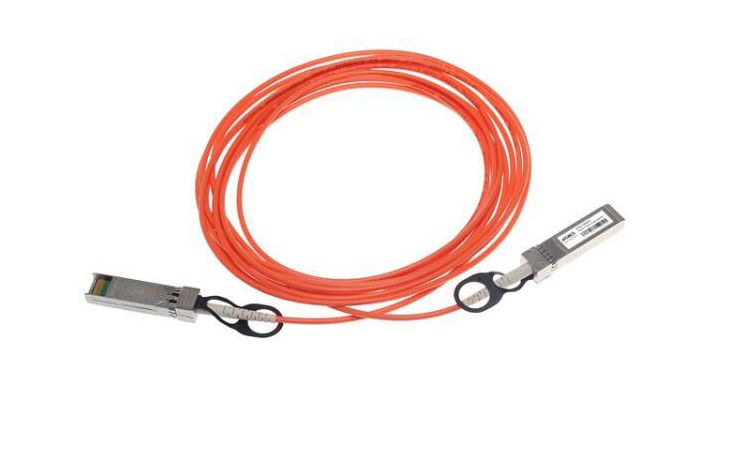
Q:Do Walsun appliances support direct attach cable (DAC)?
A:Yes, Walsun appliances support a passive DAC in release 10.5 and later.
Q:Which port must I insert the DAC into?
A:DAC is inserted into the 10G port on the appliance.
Q:Does the 1G port support a DAC?
A:No. The DAC might fit into a 1G port but is not supported.
Q:How can I order a DAC?
A:Contact your Walsun sales representative to order a DAC.
Q:Can I mix DAC and fiber transceivers on the same appliance?
A:Yes. You can mix DAC and fiber transceivers on the same appliance. Each 10G port supports both options.
Q:Can I mix SFP+ fiber and DAC in ports that are part of the same link aggregation channel?
A:No. There must be symmetry between all elements in the same link aggregation channel.
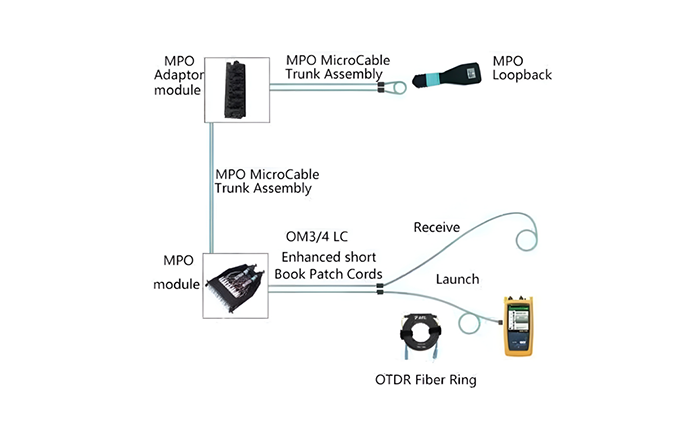
Q:Which transceivers use the MPO type connector?
A:Only 40G QSFP+ SR4 transceiver and 100G QSFP28 SR4 transceivers use the MPO type connector. All other fiber transceivers use the LC type connector.
Q:Are special adapters required for 25G, 50G, and 100G ports?
A 100G port can support five speeds: 10G, 25G, 40G, 50G, and 100G. 1G speed is not supported on the 100G port. 50G and 100G ports use the same transceiver. The appliance determines the speed, and not the port.
Only 50G/100G (QSFP28) and 40G (QSFP+) transceivers can be directly used on a QSFP28 interface. Use a QSA28 adapter on a QSFP28 interface to use 10G (SFP+) and 25G (SFP28) transceivers.