Coarse Wavelength Division Multiplexing (CWDM) has become a popular choice in the telecommunications industry due to its cost-effectiveness and efficiency in short to medium distance data transmission. But one question often arises among network engineers and tech enthusiasts: can CWDM use optical amplifiers to enhance its performance? The simple answer is yes, but it’s essential to delve deeper into the specifics to understand the hows and whys.
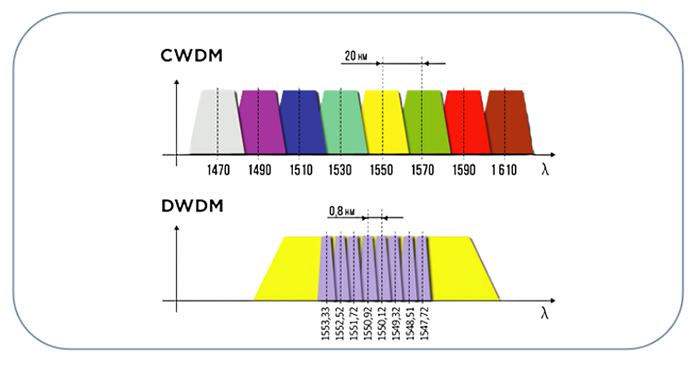
CWDM technology, characterized by its use of widely spaced wavelengths (typically 20 nm apart), offers a more economical alternative to Dense Wavelength Division Multiplexing (DWDM) for certain applications. The broad wavelength spacing in CWDM systems allows for simpler and less expensive transceivers and multiplexers, making it an attractive solution for metropolitan area networks (MANs), access networks, and other scenarios where ultra-high capacity and ultra-long distances are not the primary requirements.
However, the intrinsic nature of CWDM also brings limitations, especially regarding signal attenuation over long distances. This is where the discussion about the use of optical amplifiers becomes crucial. Optical amplifiers, such as Erbium-Doped Fiber Amplifiers (EDFAs), can significantly enhance the transmission distance and overall performance of fiber optic communication systems. These devices boost the signal without the need for optical-electrical-optical conversion, preserving the integrity and speed of the data.
The primary challenge with integrating optical amplifiers into CWDM systems lies in the wavelength range. Traditional EDFAs are optimized for the C-band (1530-1565 nm), which is commonly used in DWDM systems. However, CWDM spans a wider range, typically from 1270 nm to 1610 nm. This discrepancy means that standard EDFAs cannot amplify all the wavelengths used in CWDM.
Fortunately, advances in optical amplifier technology have led to the development of broadband EDFAs and other types of amplifiers that can accommodate a broader range of wavelengths. These broadband amplifiers are designed to cover a wider spectral range, including the wavelengths used in CWDM. By employing such amplifiers, it is possible to boost CWDM signals effectively, extending their transmission distance and enhancing overall network performance.
Another promising solution is the use of Raman amplifiers. Unlike EDFAs, which use doped fibers to amplify the signal, Raman amplifiers utilize the transmission fiber itself as the gain medium. This characteristic allows Raman amplifiers to provide gain over a much broader range of wavelengths, making them suitable for CWDM applications. By strategically placing Raman amplifiers along the transmission path, it is possible to achieve significant signal boosting across the entire CWDM spectrum.
The implementation of optical amplifiers in CWDM systems also requires careful consideration of other factors such as noise figure, gain flatness, and power consumption. Each of these parameters can impact the performance and cost-effectiveness of the solution. For instance, while broadband EDFAs can amplify a wide range of wavelengths, they may introduce higher noise levels compared to narrowband EDFAs. Similarly, Raman amplifiers, although versatile in terms of wavelength range, may have higher power consumption.
In summary, while the integration of optical amplifiers into CWDM systems presents certain challenges, it is indeed feasible and can provide substantial benefits in terms of extending transmission distances and enhancing signal quality. The key lies in selecting the appropriate type of amplifier and optimizing the system design to balance performance and cost-effectiveness. As technology continues to evolve, we can expect further advancements in amplifier designs that will make their integration into CWDM systems even more seamless and efficient.
The application of optical amplifiers in CWDM systems is not merely about extending the distance but also about improving the overall network resilience and performance. By using optical amplifiers, network operators can maintain higher signal quality over longer distances, reducing the need for regeneration sites and thus lowering operational costs.
One of the most compelling benefits of using optical amplifiers in CWDM systems is the reduction in latency. Amplifiers, by boosting the signal directly in the optical domain, help in maintaining the speed of data transmission. This is particularly critical in applications requiring real-time data transfer, such as financial transactions, live streaming, and interactive services. The enhanced signal quality ensures that data packets are less likely to be dropped or delayed, thus providing a more reliable and consistent service.
Additionally, the use of optical amplifiers can facilitate network scalability. As the demand for bandwidth continues to grow, network operators need solutions that can expand capacity without extensive infrastructure overhauls. Optical amplifiers allow for such scalability by enabling longer link spans and supporting higher data rates. This means that existing CWDM networks can be upgraded to handle increased traffic loads by simply integrating suitable amplifiers, rather than laying new fiber or installing additional hardware.
It’s also worth noting the role of hybrid amplifier systems in CWDM networks. Combining different types of amplifiers, such as EDFAs and Raman amplifiers, can provide a more comprehensive solution that leverages the strengths of each type. For instance, EDFAs can offer high gain in the C-band, while Raman amplifiers can cover the broader wavelength range. This hybrid approach can optimize performance across the entire CWDM spectrum, ensuring robust and efficient signal amplification.
Moreover, the integration of optical amplifiers into CWDM systems aligns well with the trend towards more flexible and adaptive networks. Modern telecommunications infrastructure increasingly relies on software-defined networking (SDN) and network function virtualization (NFV) to enhance flexibility and efficiency. Optical amplifiers, with their ability to dynamically adjust gain and support various wavelengths, fit naturally into this paradigm. They can be controlled and optimized through software, allowing for real-time adjustments to network conditions and demands.
However, the successful implementation of optical amplifiers in CWDM systems requires careful planning and design. Network engineers must consider factors such as amplifier placement, gain settings, and the specific characteristics of the fiber used. Each network is unique, and a one-size-fits-all approach is unlikely to yield the best results. Detailed network analysis and simulation can help identify the optimal amplifier configuration for a given CWDM system, ensuring maximum performance and cost-effectiveness.
In practical terms, this means that network operators should conduct thorough testing and validation before deploying amplifiers in a live environment. This includes assessing the impact of amplifiers on existing infrastructure, potential interference with other network components, and the overall cost-benefit analysis. By taking a methodical approach, operators can ensure that the integration of optical amplifiers delivers the desired improvements without introducing new issues.
In conclusion, while CWDM systems are inherently designed for shorter distances and cost-efficiency, the use of optical amplifiers can significantly extend their capabilities. Whether through broadband EDFAs, Raman amplifiers, or hybrid solutions, the potential to boost signal strength and extend transmission distances opens new possibilities for CWDM applications. As technology continues to advance, we can anticipate even more sophisticated and effective amplifier solutions, further enhancing the versatility and performance of CWDM networks.
By understanding and leveraging these technologies, network operators can build more robust, scalable, and efficient fiber optic networks, ready to meet the demands of an increasingly connected world.