In the fast-evolving world of network technology, adaptability and flexibility are paramount. As businesses and organizations continually upgrade their networks to handle ever-increasing data loads, understanding the capabilities of network hardware becomes crucial. One question that frequently arises is whether a 10Gb SFP (Small Form-factor Pluggable) transceiver can run at 1GB speeds. This query touches on the core of network infrastructure adaptability and cost-effectiveness.
Table of Contents
ToggleUnderstanding SFP Modules
SFP modules are hot-swappable transceivers used in networking hardware such as switches, routers, and network interface cards (NICs). They are designed to support various communication standards, including Ethernet, Fibre Channel, and SDH/SONET. SFP modules come in different variants, supporting speeds from 1Gbps to 100Gbps and beyond. Among these, 10Gb SFP modules, often referred to as SFP+, are widely used in modern high-speed networks.
The Need for Speed Variability
In many networking environments, especially those that are scaling up or transitioning from older infrastructures, the ability to use existing hardware efficiently is crucial. Upgrading entire network systems to match the latest standards can be prohibitively expensive and time-consuming. Therefore, having the ability to operate high-speed transceivers like 10Gb SFPs at lower speeds, such as 1GB, can provide significant flexibility and cost savings.
Can 10Gb SFP Run at 1GB?
Technically speaking, most 10Gb SFP+ modules are designed specifically for 10Gbps operations. However, some SFP+ modules and ports do support backward compatibility to 1Gbps. This capability depends largely on the network equipment and the specific model of the SFP+ transceiver.
Several manufacturers design their SFP+ modules to be backward compatible. For instance, when plugged into a compatible port, these modules can auto-negotiate down to 1Gbps if the connected equipment does not support higher speeds. This flexibility allows network administrators to utilize existing 1Gbps hardware while preparing for future upgrades to 10Gbps.
Practical Applications
The ability to run a 10Gb SFP at 1GB has numerous practical applications:
Incremental Upgrades: Organizations can phase their network upgrades, gradually moving from 1Gbps to 10Gbps. This approach allows for budget-friendly transitions without the need for immediate, wholesale replacements of network components.
Mixed-Speed Environments: In scenarios where different parts of the network operate at different speeds, using backward-compatible SFP+ modules can ensure seamless connectivity and communication across the network.
Maximizing Existing Investments: Businesses with existing 1Gbps equipment can extend the life of their current investments while planning for higher-speed infrastructure in the future. This strategy minimizes waste and optimizes resource utilization.
Flexibility for Temporary Setups: For temporary setups, such as trade shows or temporary office spaces, using versatile SFP+ modules allows for quick and adaptable network configurations without the need for extensive hardware changes.
Real-World Example: Educational Institutions
Educational institutions often have diverse network requirements, ranging from administrative data handling to high-speed research data transfers. A university may have an existing 1Gbps infrastructure in its administrative offices but require 10Gbps speeds in its research labs. By using backward-compatible 10Gb SFP+ modules, the university can seamlessly connect different parts of its network without unnecessary overhauls, ensuring both efficiency and cost-effectiveness.
The Technological Nuances
While the concept of running a 10Gb SFP at 1GB sounds straightforward, there are some technological nuances to consider. The backward compatibility of SFP+ modules largely hinges on the support provided by the network switch or router. Some network devices may only support specific SFP+ modules, and auto-negotiation capabilities can vary between manufacturers.
Factors Influencing Compatibility
Device Firmware: The firmware version of your network devices can play a crucial role in compatibility. Regular updates from the manufacturer can enhance backward compatibility and ensure smoother transitions between different speeds.
Module Quality: Not all SFP+ modules are created equal. Investing in high-quality, certified modules from reputable manufacturers can significantly impact performance and compatibility.
Vendor-Specific Features: Some vendors offer proprietary features in their SFP+ modules, which might affect compatibility with third-party hardware. Understanding these features and choosing modules accordingly can prevent compatibility issues.
Implementing the Change
To implement the use of 10Gb SFP+ modules at 1GB, network administrators should follow a systematic approach:
Assess Compatibility: Begin by checking the compatibility of your existing network devices with 10Gb SFP+ modules. Consult the manufacturer’s documentation or reach out to their support for detailed information on backward compatibility.
Test in a Controlled Environment: Before deploying on a large scale, test the SFP+ modules in a controlled environment. This step helps identify any potential issues and ensures that the modules will function as expected in your specific network setup.
Monitor and Adjust: Once deployed, closely monitor network performance. Pay attention to any anomalies or performance degradation. Regular monitoring allows for timely adjustments and ensures optimal performance.
The Future of Networking
The ability to run 10Gb SFP modules at 1GB speeds is a testament to the evolving nature of networking technology. As businesses and organizations continue to demand greater flexibility and efficiency from their network infrastructure, manufacturers are likely to continue innovating. Future advancements may further enhance the backward compatibility of high-speed modules, offering even greater adaptability.
Final Thoughts
In conclusion, the question “Can a 10Gb SFP run at 1GB?” is more than just a technical inquiry; it’s a reflection of the dynamic needs of modern network environments. The capability to leverage high-speed modules at lower speeds offers significant advantages in terms of flexibility, cost savings, and efficient resource utilization. As technology continues to advance, the line between different network speeds will likely blur, providing even more versatile solutions for businesses and organizations worldwide.
Whether you’re an IT manager looking to maximize existing investments or a business planning future network upgrades, understanding the flexibility of SFP+ modules is crucial. Embrace the adaptability of your network infrastructure and prepare for a future where speed and efficiency go hand in hand.
Frequently Asked Questions
Q:Can 1G SFP work with 10G SFP
A:Yes, technically, a 1G SFP can physically fit into a 10G SFP port, but it will not work as intended. The mismatch in data rates will likely result in communication errors, link instability, and degraded network performance. Mixing different SFP speeds can lead to potential issues such as data packet loss, increased latency, and network congestion.
To address these issues when mixing 1G and 10G SFPs, it is recommended to use media converters or rate-selectable SFP modules that can adapt to different speeds. These devices can help bridge the gap between different SFP speeds and ensure compatibility within the network.
From a current perspective, with the advancement of technology and the widespread adoption of higher network speeds, it is becoming increasingly important to maintain uniformity in SFP speeds to optimize network performance and reliability. Therefore, it is advisable to avoid mixing 1G and 10G SFPs whenever possible to prevent potential compatibility issues and ensure seamless network operation.
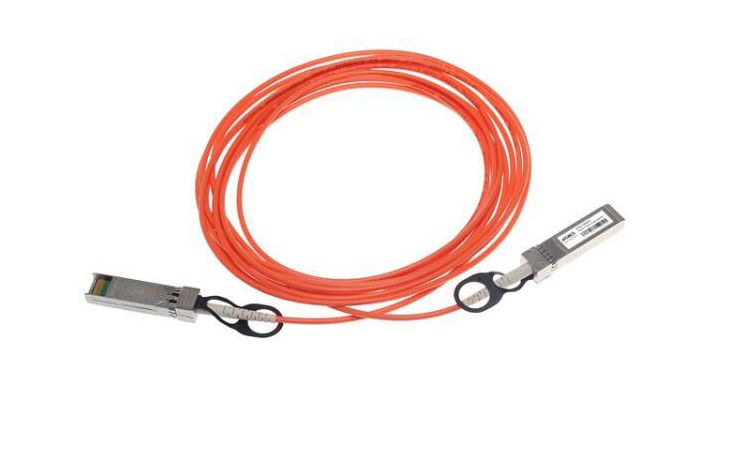
Q:Do Walsun appliances support direct attach cable (DAC)?
A:Yes, Walsun appliances support a passive DAC in release 10.5 and later.
Q:Which port must I insert the DAC into?
A:DAC is inserted into the 10G port on the appliance.
Q:Does the 1G port support a DAC?
A:No. The DAC might fit into a 1G port but is not supported.
Q:How can I order a DAC?
A:Contact your Walsun sales representative to order a DAC.
Q:Can I mix DAC and fiber transceivers on the same appliance?
A:Yes. You can mix DAC and fiber transceivers on the same appliance. Each 10G port supports both options.
Q:Can I mix SFP+ fiber and DAC in ports that are part of the same link aggregation channel?
A:No. There must be symmetry between all elements in the same link aggregation channel.
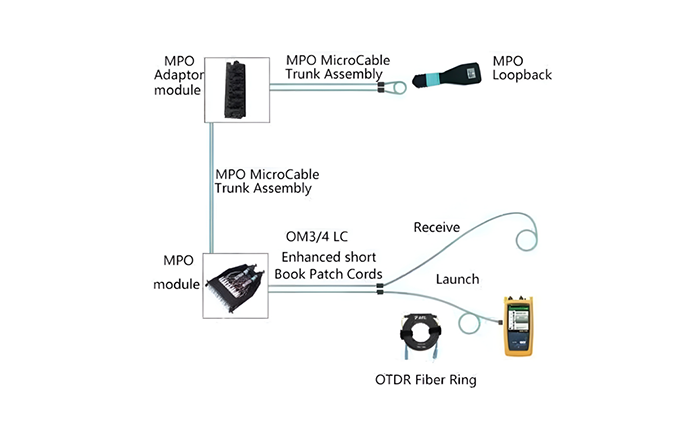
Q:Which transceivers use the MPO type connector?
A:Only 40G QSFP+ SR4 transceiver and 100G QSFP28 SR4 transceivers use the MPO type connector. All other fiber transceivers use the LC type connector.
Q:Are special adapters required for 25G, 50G, and 100G ports?
A 100G port can support five speeds: 10G, 25G, 40G, 50G, and 100G. 1G speed is not supported on the 100G port. 50G and 100G ports use the same transceiver. The appliance determines the speed, and not the port.
Only 50G/100G (QSFP28) and 40G (QSFP+) transceivers can be directly used on a QSFP28 interface. Use a QSA28 adapter on a QSFP28 interface to use 10G (SFP+) and 25G (SFP28) transceivers.
Related Article:
SFP-CWGE27-80C 1.25G CWDM SFP 1270nm 80km LC SMF DDM Transceiver Module
TRENDnet TEG-MGBS10 Compatible 1000Base LX SFP 1310nm 10km LC SMF DDM Transceiver Module
SFP-GE35-2BX20 1000Base 2 Channels BX BIDI CSFP TX1310nm-RX1550nm 20km LC SMF DDM Transceiver Module
SFP-GE55-ZX 1000Base SFP ZX 1550nm 80km LC SMF DDM Transceiver Module
SFP-DWGE17-120C 1.25G DWDM SFP C17 100GHz 1563.86nm 120km LC SMF DDM Transceiver Module