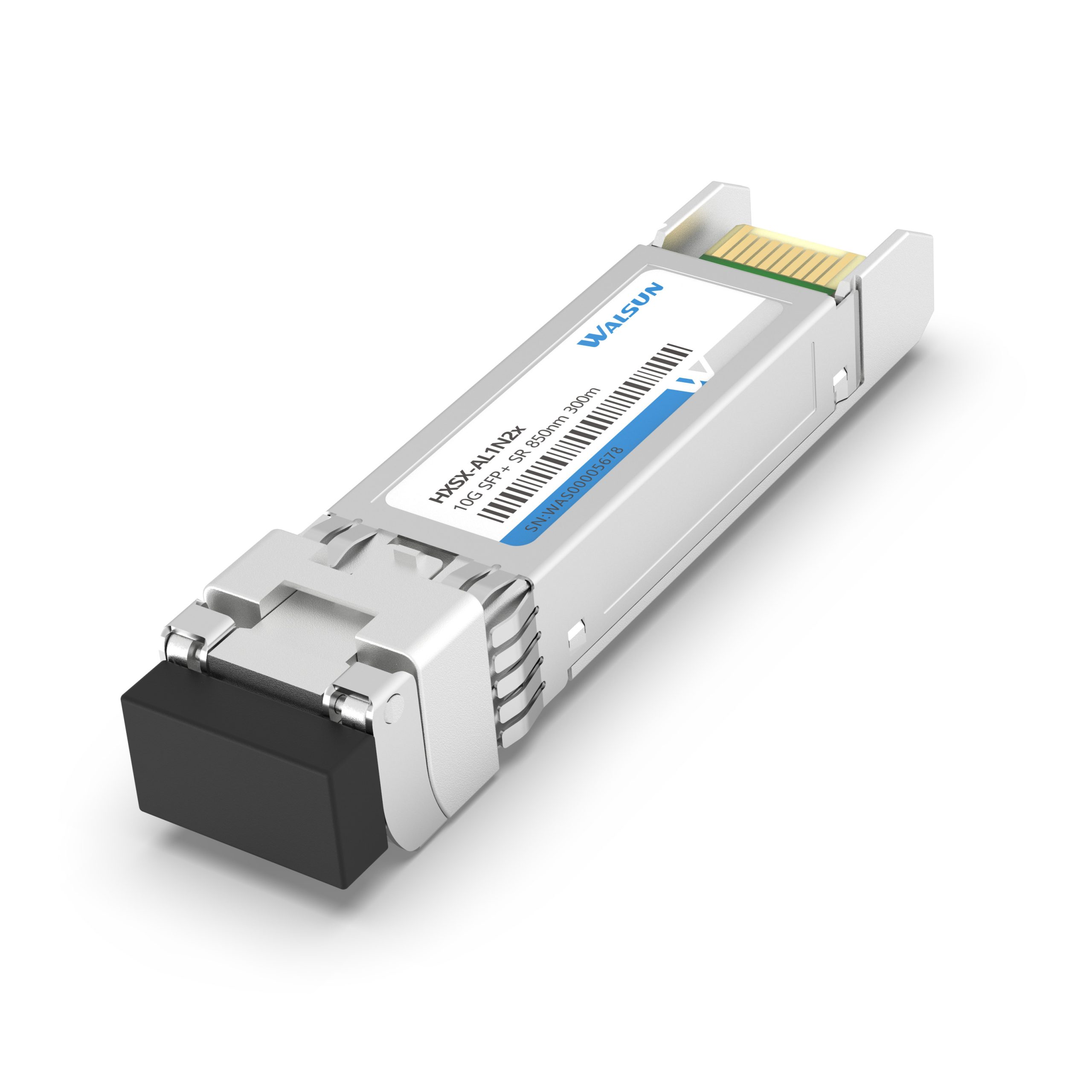
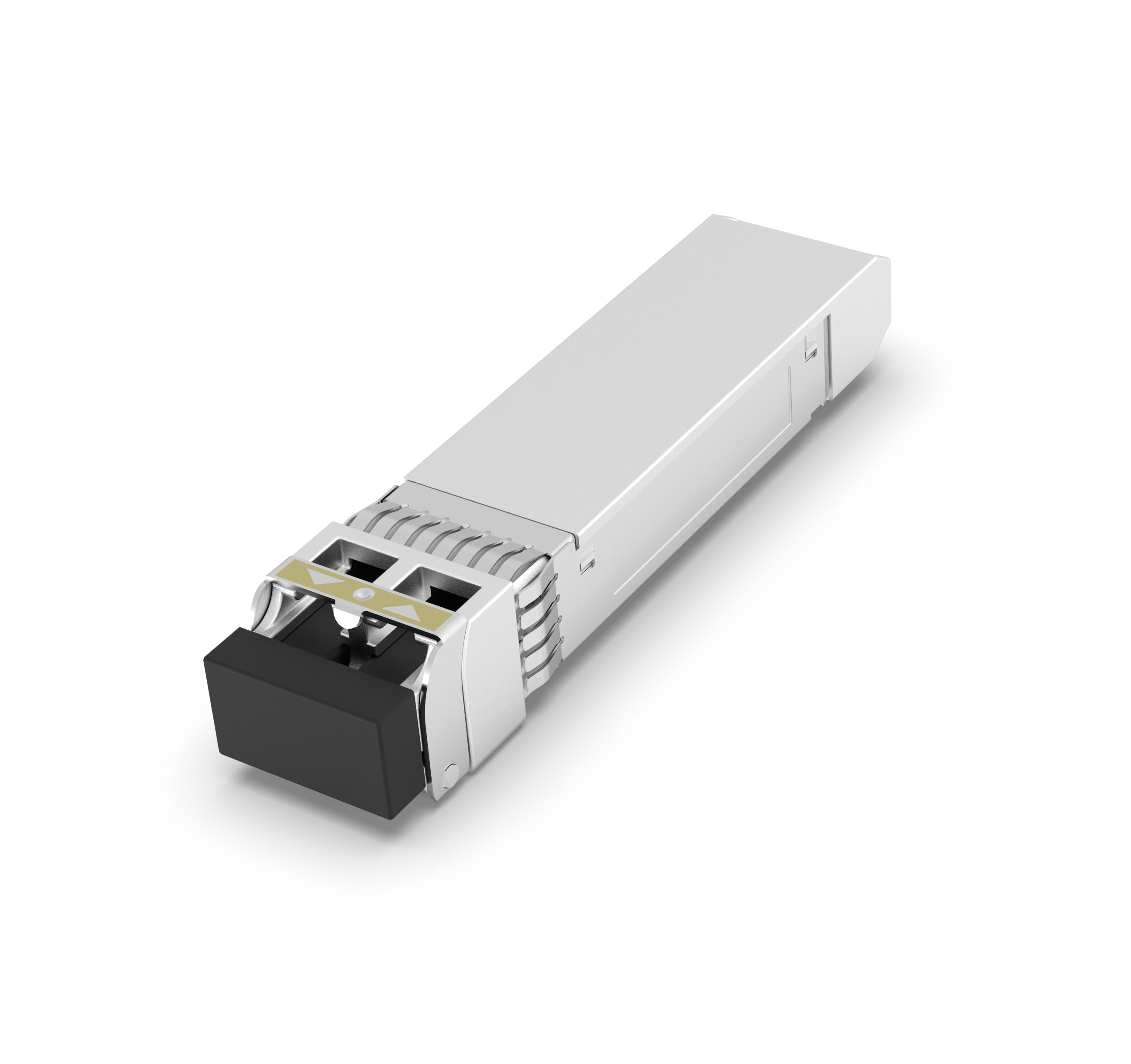
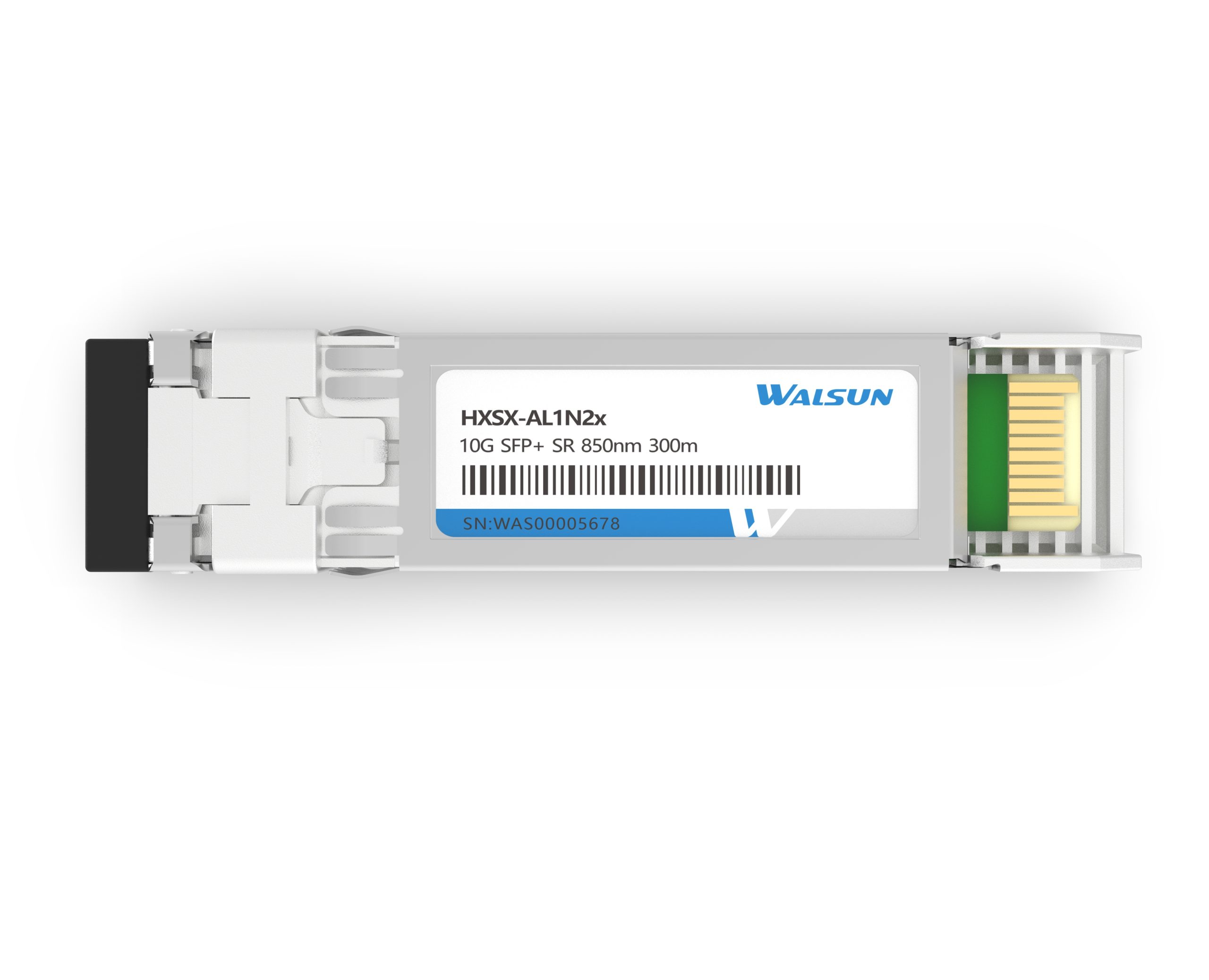
10G SFP+ SR 850nm 300m

  • Hot-pluggable SFP+ package
  • Full-duplex transceiver module
  • 850nm VCSEL transmitter and PIN receiver
  • Compliant with IEEE 802.3ae, SFF-8472, SFF-8431, SFF-8432, and SFP+ MSA Ethernet standards
  • Maximum power consumption less than 1W
  • Built-in Digital Diagnostic Monitoring (DDM)
  • Power supply voltage 3.3V
  • RoHS environmental standards compliant (lead-free)
  • Class 1/1M product per IEC60825-1 requirements
  • Meets Telcordia (Bellcore) GR-468-CORE reliability requirements
  • Meets EMI and ESD requirements
Category: ,

Warranty : 30-Day Free Return, 3-Year Free Replacement, 5-Year Warranty, Lifetime After-sales Technical Support.

Product Model SFP-10G-SR Vendor Name Walsun
Form Factor SFP+ Data Rate 10.3125Gbps
Wavelength 850nm Distance 300m@OM3/400m@OM4
Connector LC Duplex Cable Type MMF
Transmitter Type VCSEL Detector Types PIN
TX Power -6.5~-1dBm Receiver Sensitivity < -9.9dBm
Power Consumption ≤1W Operation Temperature 0~70°C
DDM Support EMC Support
Protocols IEEE 802.3ae, SFF-8472, SFF-8431, SFF-8432, SFP+ MSA, CPRI, eCPRI

Q: Types of 10G SFP+ Optical Modules

A: Typically, SFP+ optical modules are categorized based on their practical applications, with common types including 10G SFP+, BiDi SFP+, CWDM SFP+, and DWDM SFP+. For more information, please click on the 10G SFP+ Transceiver Modules category.

Q: What is the difference between 10G SFP+ and BiDi SFP+ transceivers?

A: The primary distinction lies in the number of fibers required for bidirectional communication:

1. Standard 10G SFP+ Transceivers:

Conventional 10G SFP+ transceivers utilize two fibers, one for transmitting data and another for receiving.

They typically employ two separate wavelengths for bidirectional communication, necessitating individual fibers for each direction.

2. BiDi SFP+ Transceivers:

BiDi (Bi-Directional) SFP+ transceivers employ wavelength division multiplexing to achieve bidirectional communication over a single fiber.

They transmit and receive data at different wavelengths on the same fiber, streamlining cabling infrastructure and reducing the number of fibers needed.

Whereas standard 10G SFP+ transceivers require two fibers for bidirectional communication, BiDi SFP+ transceivers accomplish the same with just one fiber, offering advantages in scenarios with limited fiber availability or where infrastructure complexity is a concern.

Leave A Message
Shopping Cart

Request a Quote

At Walsun, we value every opportunity to connect with our clients, partners, and visitors. Your feedback, enquiries and communication are of the utmost importance to us.