

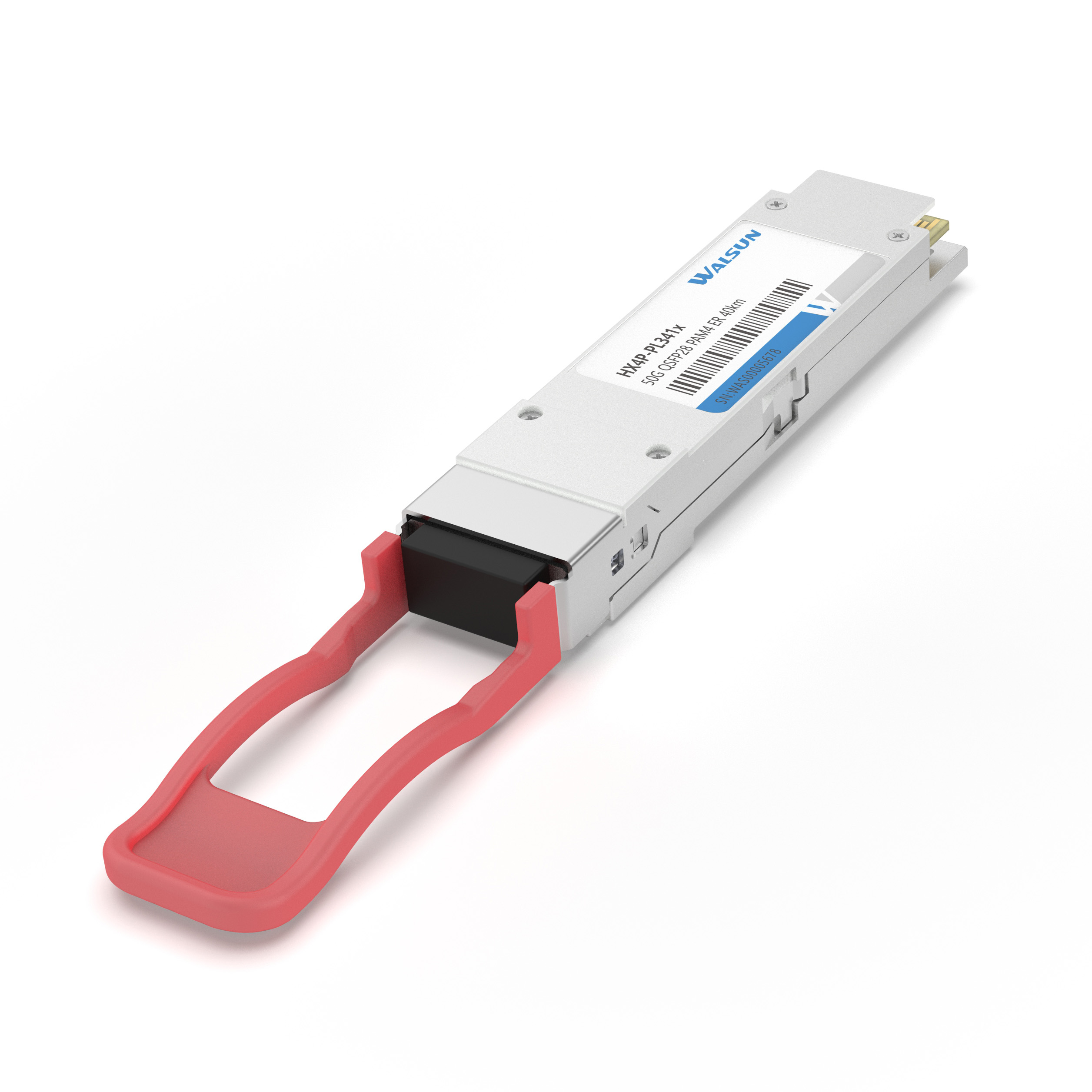
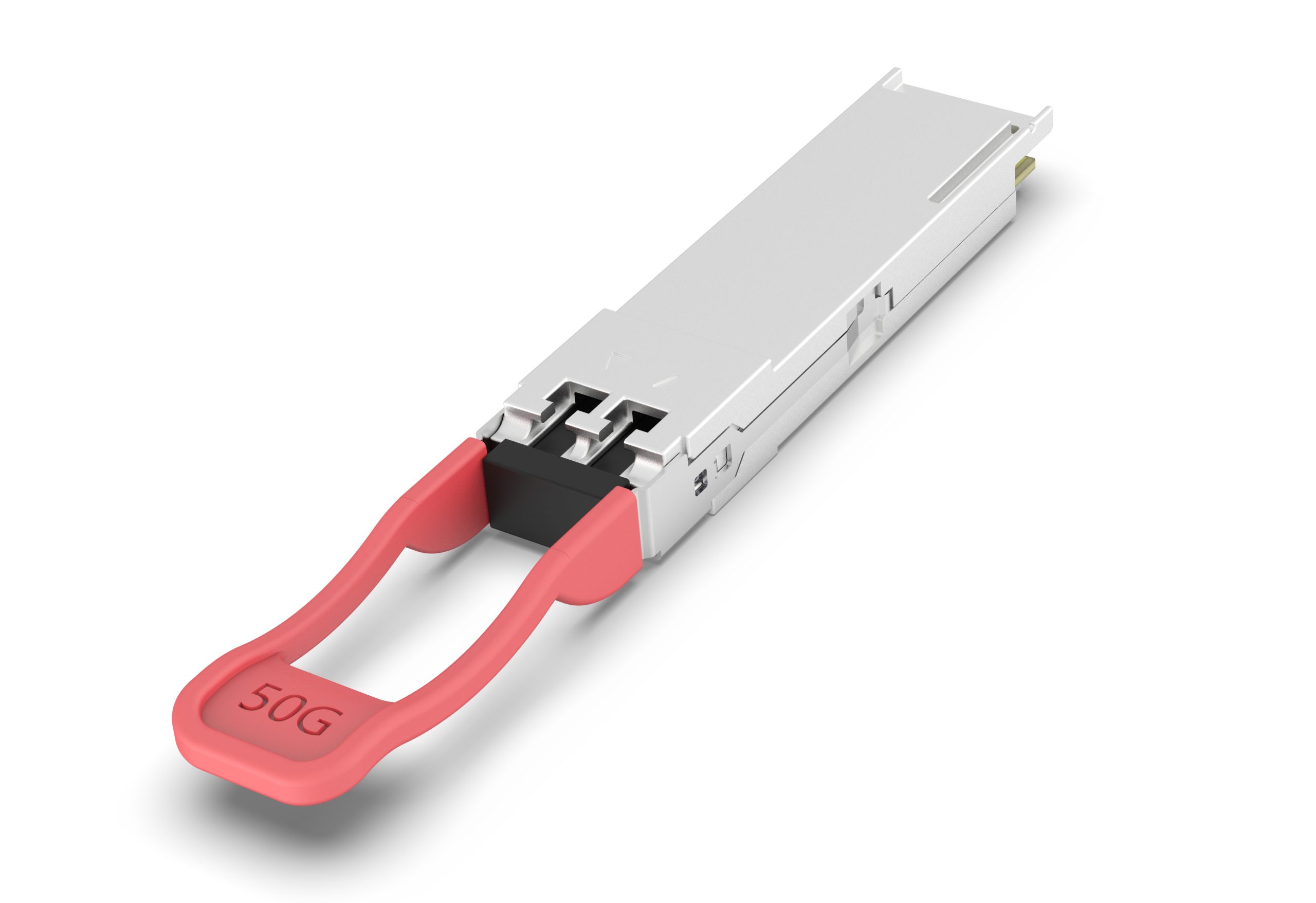
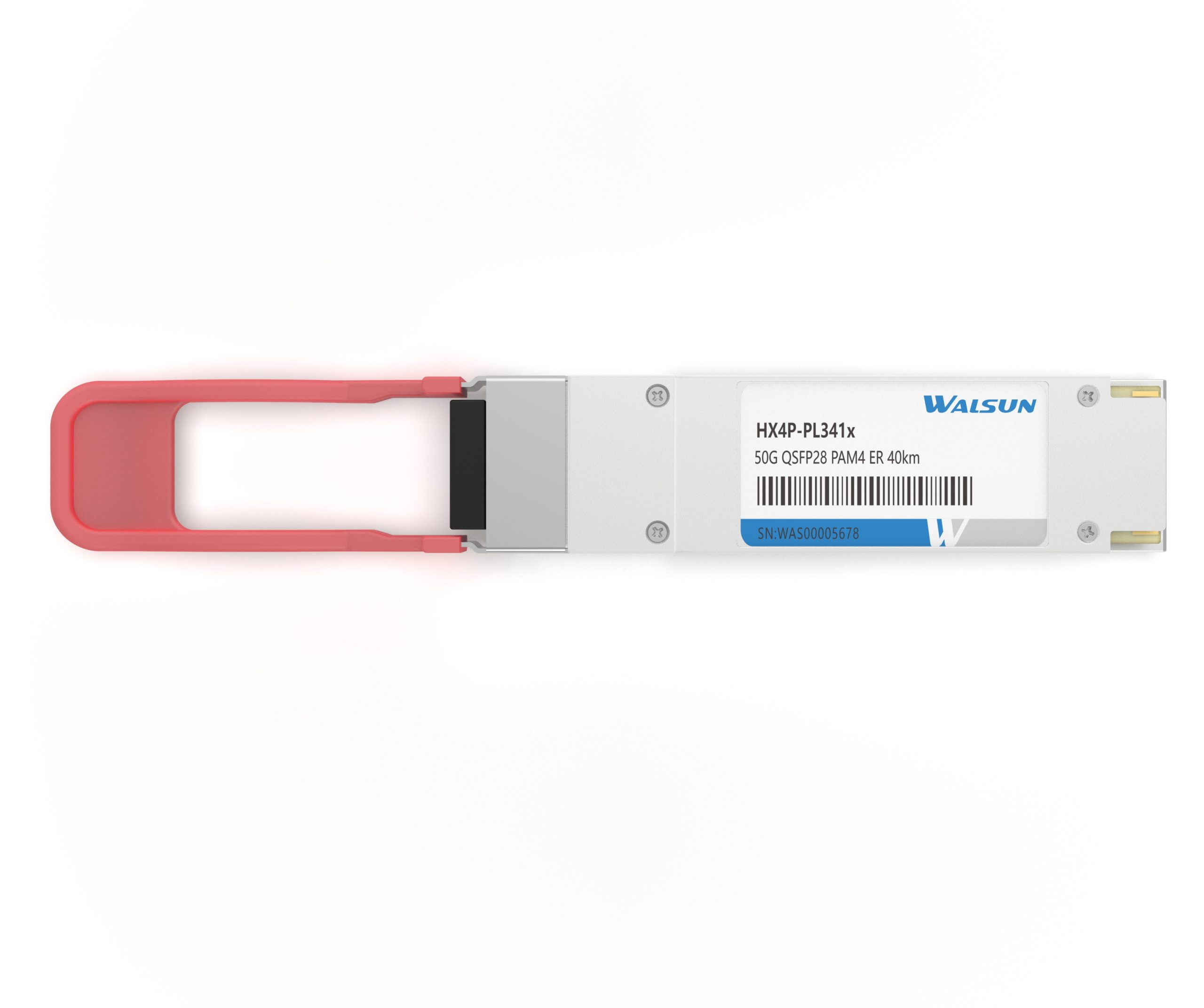
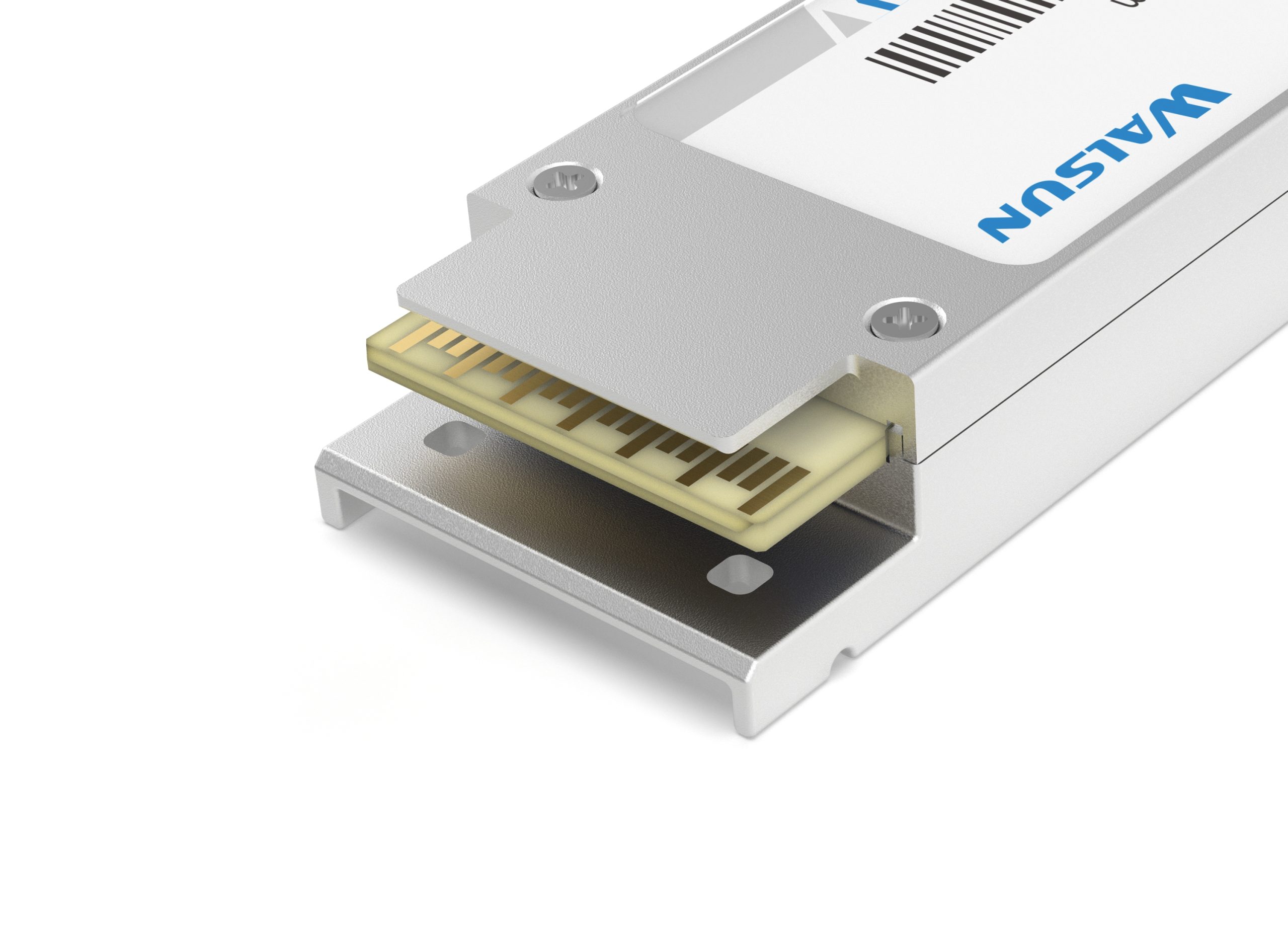
50G QSFP28 PAM4 LR 1310nm 40km
- Adopts hot-pluggable QSFP28 package
- Full-duplex transceiver module
- DFB transmitter and PIN receiver
- Complies with IEEE 802.3cd, SFF-8636, SFF-8679, and QSFP28 MSA Ethernet standards
- Maximum power consumption less than 4.0W
- Built-in Digital Diagnostic Monitoring (DDM)
- Power supply voltage 3.3V
- RoHS compliant (lead-free)
- Class 1/1M product, compliant with IEC60825-1 requirements
- Meets Telcordia (Bellcore) GR-468-CORE reliability requirements
- Meets EMI and ESD requirements
Warranty : 30-Day Free Return, 3-Year Free Replacement, 5-Year Warranty, Lifetime After-sales Technical Support.
| Product Model | QSFP-50G-LR | Vendor Name | Walsun |
| Form Factor | QSFP28 | Data Rate | 53.2Gbps |
| Wavelength | 1310nm | Distance | 10km |
| Connector | LC Duplex | Cable Type | SMF |
| Transmitter Type | DFB | Detector Types | PIN |
| TX Power | -4~4.2dBm | Receiver Sensitivity | < -8.8dBm |
| Power Consumption | ≤4.0W | Operation Temperature | 0~70°C |
| DDM | Support | EMC | Support |
| Protocols | IEEE 802.3cd, SFF-8636, SFF-8679, QSFP28 MSA, CPRI, eCPRI | ||
Q: Can a QSFP28 SR4 optical module interoperate with a 100G SR10 optical module?
A: No, they cannot. A 100G QSFP28 SR4 optical module has only 4 transmit and receive channels, insufficient to support 10 lanes of 10G transmission. Moreover, the QSFP28 SR4 is designed for 4x10G or 4x25G transmission and is incompatible with the 100G SR10 optical module.
Q: Do QSFP28 SR4 optical module connectors need cleaning? If so, how should they be cleaned?
A: Yes, they do. Dust and contaminants can accumulate on QSFP28 SR4 optical module connectors, potentially leading to reduced transmit power. To ensure transmission stability, it is recommended to clean the connectors each time before disconnecting and reconnecting. A one-click MTP/MPO fiber pen cleaner is the optimal choice for cleaning QSFP28 SR4 optical module connectors.
Q: The role of 50G QSFP28 optical modules in AI and big data scenarios
A: In AI and big data scenarios, they provide high-speed data transmission, supporting model training and analysis, and meet the needs of rapid movement and processing of large datasets, accelerating response times for AI applications.
Q: The function of 50G QSFP28 optical modules in 5G networks
A: In 5G networks, 50G QSFP28 modules support backhaul, such as high-speed data transmission between base stations, fulfilling the bandwidth and low latency requirements of data-intensive applications in the 5G era.
Q: Advantages of 50G QSFP28 optical modules in cloud services
A: They offer high bandwidth and low latency, facilitating quick data synchronization, backup, and migration between clouds, optimizing cloud service response times, and are well-suited for high-density deployments and rapid scaling in cloud environments.
Q: The role of 50G QSFP28 optical modules in green data centers
A: By incorporating low-power designs, high density to reduce space requirements, and integrating with automated management systems, they help decrease operational costs and energy consumption, contributing to the realization of green data centers.
Related products
-
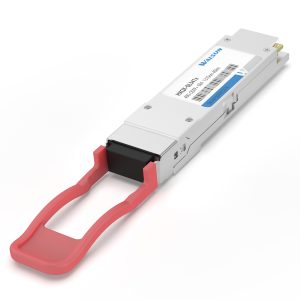 40G Transceivers
40G QSFP+ ER4 40km
-
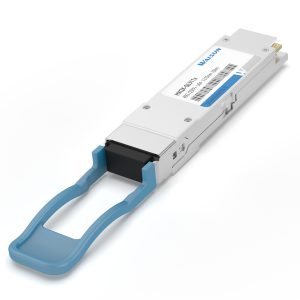 40G Transceivers
40G QSFP+ LR4 10km
-
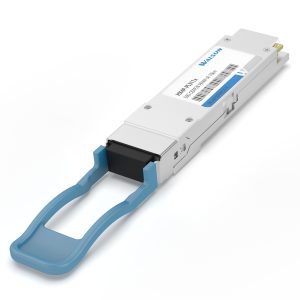 50G QSFP28
50G QSFP28 PAM4 ER 1310nm 10km
-
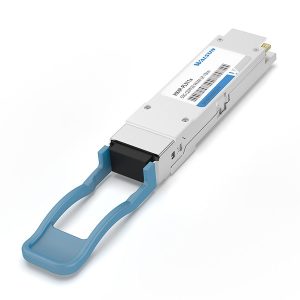 50G QSFP28
50G QSFP28 PAM4 LR 1310nm10km