In the ever-evolving landscape of networking technologies, staying ahead of the curve is essential. Among the numerous components that form the backbone of modern network infrastructures, transceivers play a pivotal role. Specifically, Small Form-factor Pluggable (SFP) transceivers have garnered significant attention for their flexibility and performance. Within this category, SFP28 transceivers are particularly noteworthy. Designed primarily for 25 Gigabit Ethernet, these powerful devices promise high-speed data transmission and efficient network performance. But a question that often arises in the minds of network engineers and IT professionals is: Can SFP28 run at 1GB?
Table of Contents
ToggleUnderstanding SFP28: A Quick Overview
SFP28, an acronym for Small Form-factor Pluggable 28, is a high-speed transceiver designed to meet the demands of modern data centers and enterprise networks. Its primary function is to facilitate data transmission at speeds of 25 Gbps, which is crucial for environments that require high bandwidth and low latency. Built on the SFP+ form factor, SFP28 transceivers offer improved performance, making them a go-to choice for upgrading network infrastructures.
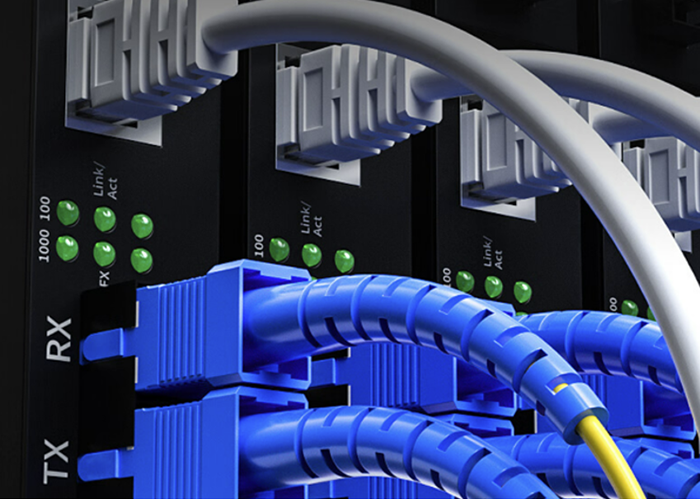
The SFP28 transceiver supports both single-mode and multi-mode fiber optics, offering versatility in various networking scenarios. Its compact size and hot-swappable nature make it an excellent choice for dynamic and scalable network environments. However, the question of whether SFP28 can operate at 1GB remains, as network administrators seek to maximize their investments and ensure backward compatibility.
Backward Compatibility: A Key Consideration
One of the most significant advantages of the SFP family is its emphasis on backward compatibility. This means that newer models, like the SFP28, are designed to work with older infrastructure, providing a seamless upgrade path without the need for a complete overhaul. This backward compatibility is a crucial factor in determining whether SFP28 can operate at lower speeds, such as 1GB.
Backward compatibility is not merely a marketing term but a practical feature that ensures longevity and flexibility in network design. Network engineers often face the challenge of integrating new technologies with existing hardware. In this context, the ability of SFP28 to support lower speeds can be a game-changer, allowing for gradual upgrades and cost savings.
Can SFP28 Run at 1GB?
To address the central question: Yes, SFP28 transceivers can run at 1GB, but there are important considerations to keep in mind. While SFP28 is optimized for 25 Gbps, it retains the flexibility to operate at lower speeds, including 10 Gbps and 1 Gbps. This adaptability is possible due to the inherent design and backward compatibility features of the SFP28 transceiver.
When using an SFP28 transceiver in a 1GB application, it’s crucial to ensure that the network switch or router supports this speed and that the transceiver is correctly configured. Most modern network equipment is designed to handle multiple speeds, but it’s always best to verify compatibility with the specific hardware being used.
The Practical Implications
Running an SFP28 transceiver at 1GB can be highly beneficial in various scenarios. For instance, in mixed network environments where both legacy and modern equipment coexist, the ability to use a single type of transceiver for multiple speeds simplifies inventory management and reduces costs. It also allows for a phased upgrade approach, where parts of the network can be upgraded incrementally rather than all at once.
Moreover, in scenarios where high-speed data transmission is not always necessary, using SFP28 transceivers at lower speeds can optimize performance and reduce power consumption. This flexibility ensures that the network can adapt to varying demands without compromising efficiency or reliability.
In the next part, we will delve deeper into the technical aspects of configuring SFP28 for 1GB operation, explore real-world use cases, and discuss the potential benefits and challenges associated with this approach.
Technical Aspects of Configuring SFP28 for 1GB Operation
To effectively configure an SFP28 transceiver for 1GB operation, understanding the technical nuances is essential. Although SFP28 transceivers are engineered for 25 Gbps, they can be manually configured to operate at lower speeds. Here’s a step-by-step guide to achieve this:
Check Compatibility: Ensure that both the transceiver and the network device (switch, router) support 1GB speed. Most modern devices come with this multi-speed compatibility, but it’s prudent to consult the device’s documentation or manufacturer’s website.
Firmware and Software Updates: Update the firmware of the network device to the latest version. Manufacturers often release updates that improve compatibility and performance for various transceivers.
Manual Configuration: Access the network device’s management interface (usually through a web GUI or command-line interface). Navigate to the port settings where the SFP28 transceiver is installed. Manually set the port speed to 1 Gbps. This step may vary slightly depending on the manufacturer, so refer to the device’s user manual for precise instructions.
Testing and Validation: After configuring the speed, perform a series of tests to ensure stable operation. This includes running network diagnostics, checking data transfer rates, and monitoring for any errors or anomalies.
Real-World Use Cases and Benefits
Phased Network Upgrades: Many organizations are in the process of upgrading their network infrastructures to handle higher data rates. By leveraging SFP28 transceivers at 1GB, IT departments can implement a phased upgrade strategy. This approach minimizes downtime and spreads out the costs over time, making the transition smoother and more budget-friendly.
Cost Efficiency: Investing in versatile transceivers like the SFP28 can lead to significant cost savings. Instead of purchasing separate transceivers for different speeds, organizations can standardize on SFP28, using them at 1GB today and 25GB in the future as needs evolve.
Reduced Complexity: Simplifying inventory management is another advantage. With a single type of transceiver supporting multiple speeds, the logistical challenges of maintaining stock and managing compatibility across various devices are greatly reduced.
Energy Efficiency: Operating SFP28 transceivers at lower speeds can also lead to reduced power consumption. This is particularly beneficial in large data centers where energy costs are a significant concern. By matching the transceiver speed to the actual data rate requirements, organizations can optimize their energy usage.
Challenges and Considerations
While running SFP28 transceivers at 1GB offers numerous benefits, it’s not without challenges. Understanding these challenges is crucial for effective implementation.
Configuration Complexity: Manually configuring network devices to support multiple speeds can be complex and time-consuming. IT staff need to be well-versed in the specific configuration procedures for each device.
Potential Performance Bottlenecks: If the network includes a mix of 1GB and 25GB devices, there could be potential performance bottlenecks. Ensuring that data flows smoothly across different speeds requires careful network planning and traffic management.
Vendor Support: Not all vendors may support running SFP28 at 1GB. It’s important to verify this capability with the transceiver and network device manufacturers to avoid compatibility issues.
Conclusion: A Flexible Future
The ability of SFP28 transceivers to operate at 1GB demonstrates their remarkable flexibility and forward-thinking design. For organizations looking to future-proof their network infrastructures while maintaining compatibility with existing equipment, this capability is invaluable. By understanding the technical requirements and potential benefits, network administrators can make informed decisions that optimize performance, reduce costs, and ensure a smooth transition to higher-speed networking in the future.
In summary, while SFP28 transceivers are designed for high-speed applications, their backward compatibility makes them a versatile and cost-effective solution for modern networks. Embracing this flexibility allows for phased upgrades, reduced complexity, and enhanced energy efficiency, all while ensuring robust and reliable network performance.
Frequently Asked Questions
Q:Can 1G SFP work with 10G SFP
A:Yes, technically, a 1G SFP can physically fit into a 10G SFP port, but it will not work as intended. The mismatch in data rates will likely result in communication errors, link instability, and degraded network performance. Mixing different SFP speeds can lead to potential issues such as data packet loss, increased latency, and network congestion.
To address these issues when mixing 1G and 10G SFPs, it is recommended to use media converters or rate-selectable SFP modules that can adapt to different speeds. These devices can help bridge the gap between different SFP speeds and ensure compatibility within the network.
From a current perspective, with the advancement of technology and the widespread adoption of higher network speeds, it is becoming increasingly important to maintain uniformity in SFP speeds to optimize network performance and reliability. Therefore, it is advisable to avoid mixing 1G and 10G SFPs whenever possible to prevent potential compatibility issues and ensure seamless network operation.
Q:Do Walsun appliances support direct attach cable (DAC)?
A:Yes, Walsun appliances support a passive DAC in release 10.5 and later.
Q:Which port must I insert the DAC into?
A:DAC is inserted into the 10G port on the appliance.
Q:Does the 1G port support a DAC?
A:No. The DAC might fit into a 1G port but is not supported.
Q:How can I order a DAC?
A:Contact your Walsun sales representative to order a DAC.
Q:Can I mix DAC and fiber transceivers on the same appliance?
A:Yes. You can mix DAC and fiber transceivers on the same appliance. Each 10G port supports both options.
Q:Can I mix SFP+ fiber and DAC in ports that are part of the same link aggregation channel?
A:No. There must be symmetry between all elements in the same link aggregation channel.
Q:Which transceivers use the MPO type connector?
A:Only 40G QSFP+ SR4 transceiver and 100G QSFP28 SR4 transceivers use the MPO type connector. All other fiber transceivers use the LC type connector.
Q:Are special adapters required for 25G, 50G, and 100G ports?
A 100G port can support five speeds: 10G, 25G, 40G, 50G, and 100G. 1G speed is not supported on the 100G port. 50G and 100G ports use the same transceiver. The appliance determines the speed, and not the port.
Only 50G/100G (QSFP28) and 40G (QSFP+) transceivers can be directly used on a QSFP28 interface. Use a QSA28 adapter on a QSFP28 interface to use 10G (SFP+) and 25G (SFP28) transceivers.