In the world of networking, the RJ45 connector has been a longstanding staple. Its versatility and reliability have made it the go-to choice for a variety of Ethernet applications. But as technology advances, questions arise about its ability to keep up, especially concerning high-speed networks. One pressing question that often comes up is, “Can RJ45 do 10G?”
To answer this question, we first need to understand what the RJ45 connector is and how it works. The RJ45, a type of connector commonly used with Ethernet cables, is a part of the Ethernet standard that has evolved significantly over the years. It typically connects with twisted pair cables and supports a range of speeds, from the original 10 Mbps Ethernet (10Base-T) to the more common 100 Mbps (100Base-TX) and 1 Gbps (1000Base-T) speeds.
However, as networks demand faster speeds and greater bandwidth, the need for 10G Ethernet (10 gigabits per second) has become increasingly prevalent. The question now is whether the RJ45 connector, which has served so well in previous generations of Ethernet, can handle this new standard.
The answer lies in the capabilities of the twisted pair cables used with RJ45 connectors. To support 10G Ethernet, cables must meet specific performance criteria. The traditional Cat5e cables, which were once the standard for Gigabit Ethernet, fall short when it comes to 10G speeds. For 10G Ethernet, higher-grade cables are required.
Cat6a (Category 6a) cables are the most common type used for 10G Ethernet over RJ45 connectors. Cat6a cables are designed to handle frequencies up to 500 MHz and provide sufficient shielding to minimize interference, making them suitable for 10G speeds over distances up to 100 meters. This makes RJ45 a viable option for 10G Ethernet in many scenarios, provided the cables meet the necessary specifications.
On the other hand, Cat7 (Category 7) and Cat8 (Category 8) cables offer even higher performance and are designed to support faster speeds and greater frequencies. Cat7 cables support up to 600 MHz, and Cat8 cables can handle up to 2000 MHz. While Cat7 cables can support 10G Ethernet over slightly shorter distances than Cat6a (up to 100 meters), Cat8 cables are designed for even faster speeds, including 25G and 40G Ethernet, though they are less common in typical RJ45 deployments.
It’s important to note that while RJ45 connectors can handle 10G speeds with the right cables, the performance of your network will also depend on other factors, such as network hardware and environmental conditions. For instance, network switches, routers, and other equipment must also support 10G Ethernet to fully utilize the potential of your RJ45 connections.
In summary, the RJ45 connector can indeed support 10G Ethernet, provided that the associated cables, such as Cat6a, Cat7, or Cat8, meet the necessary performance standards. This compatibility makes the RJ45 a flexible option for upgrading to faster network speeds without requiring a complete overhaul of your existing infrastructure.
While RJ45 connectors can support 10G Ethernet under the right conditions, it’s crucial to recognize the limitations and potential alternatives. The performance of a 10G network using RJ45 will largely depend on the quality of the cables and connectors, as well as the distance between devices.
For many users, the standard Cat6a cable is adequate for 10G Ethernet applications within the typical range of up to 100 meters. However, in environments where the distance between devices exceeds this range or where higher performance is required, alternatives may be necessary.
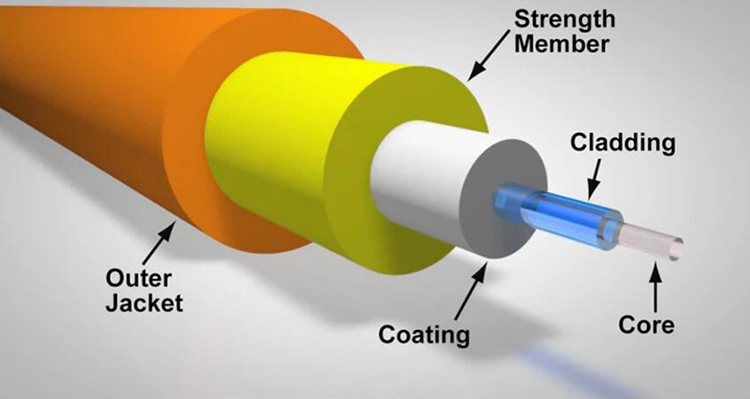
One such alternative is fiber optic cables. Fiber optics offer several advantages over twisted pair cables, including greater bandwidth, longer transmission distances, and immunity to electromagnetic interference. Fiber optic connections use different types of connectors, such as LC, SC, and ST, and are commonly used in high-speed network environments where performance and distance are critical.
Another alternative is the use of higher-grade twisted pair cables like Cat7 and Cat8. While these cables are designed to support higher speeds and frequencies, they can be more expensive and may require more careful installation. Cat7 cables, with their shielding and higher frequency capabilities, can support 10G Ethernet but are less commonly used than Cat6a cables. Cat8 cables, while capable of supporting even higher speeds, are generally used for specialized applications and shorter distances.
For new installations or upgrades, it’s also worth considering the latest advancements in Ethernet standards. The evolution of Ethernet technology continues to introduce new standards, such as 25GBASE-T and 40GBASE-T, which offer higher speeds but require more advanced cabling and connectors. These standards are designed to address the growing demands of data centers and high-performance computing environments.
Moreover, it’s essential to assess the overall network infrastructure, including switches, routers, and other network devices, to ensure compatibility with 10G Ethernet. Even if your cables and connectors are capable of supporting 10G speeds, the performance will be limited by any components in the network that do not support the same speed.
In conclusion, while RJ45 connectors can indeed handle 10G Ethernet with the appropriate cables, the choice of cabling and network equipment will significantly impact overall performance. For many users, Cat6a cables provide a practical and cost-effective solution for 10G Ethernet. However, for more demanding environments, fiber optics or higher-grade twisted pair cables may be required. Understanding these options and their implications will help you make informed decisions about your network infrastructure and ensure that your network can meet current and future demands effectively.