In the realm of optical networking, the terms CWDM (Coarse Wavelength Division Multiplexing) and DWDM (Dense Wavelength Division Multiplexing) frequently emerge, often leaving those new to the field puzzled about their differences and specific applications. One of the fundamental distinctions between these two technologies lies in their channel spacing, which plays a pivotal role in determining their usage scenarios, cost implications, and performance capabilities.
CWDM: The Wider Path
CWDM is renowned for its wider channel spacing compared to DWDM. Channel spacing refers to the distance between adjacent channels in a wavelength-division multiplexing system. In CWDM, this spacing is typically 20 nanometers (nm), significantly broader than the 0.8 nm or 0.4 nm channel spacing found in DWDM systems. But what does this mean in practical terms?
The wider channel spacing of CWDM allows for simpler and less expensive optical components. Since the channels are more spread out, the system can tolerate a greater degree of wavelength drift caused by temperature fluctuations and other environmental factors. This makes CWDM an attractive choice for metropolitan area networks (MANs), enterprise networks, and other applications where cost efficiency and straightforward deployment are paramount.
Moreover, the relaxed requirements for wavelength precision in CWDM systems lead to the use of uncooled lasers, which are cheaper and consume less power than the cooled lasers required by DWDM. This results in significant cost savings both in terms of initial investment and ongoing operational expenses, making CWDM a cost-effective solution for many scenarios.
DWDM: The Path of Density and Precision
On the other hand, DWDM’s much narrower channel spacing allows it to pack more wavelengths onto a single fiber, dramatically increasing the data-carrying capacity of the network. DWDM systems can support up to 96 channels, compared to CWDM’s typical limit of 18 channels. This makes DWDM the go-to technology for long-haul and high-capacity networks where maximizing the use of existing fiber infrastructure is critical.
The narrow channel spacing of DWDM necessitates the use of highly precise and stable lasers, often requiring active cooling mechanisms to maintain the exact wavelengths. While this precision comes at a higher cost, the benefits are substantial. DWDM’s ability to carry a vast amount of data over long distances without significant loss or interference is crucial for backbone networks that form the core of the internet and large-scale telecommunications.
Furthermore, DWDM systems are often equipped with advanced amplification techniques, such as Erbium-Doped Fiber Amplifiers (EDFAs), which extend the reach of the signals over thousands of kilometers without the need for electrical regeneration. This feature is particularly valuable for undersea cables and other long-haul applications where signal integrity over vast distances is paramount.
The Trade-Offs: Choosing the Right Tool for the Job
The choice between CWDM and DWDM ultimately boils down to specific network requirements and budget considerations. CWDM, with its wider channel spacing, is ideal for scenarios where simplicity, cost-effectiveness, and moderate data capacity suffice. Its ease of deployment and maintenance make it a favorite for shorter-distance communications within cities and campuses.
In contrast, DWDM’s narrower channel spacing is a powerhouse for high-capacity, long-distance communications. Despite the higher initial and operational costs, the ability to transmit vast amounts of data over long distances without frequent signal regeneration makes DWDM indispensable for core network infrastructures.
Conclusion
Understanding the differences in channel spacing between CWDM and DWDM sheds light on their respective advantages and applications. CWDM’s wider spacing brings cost efficiency and simplicity, while DWDM’s narrow spacing offers unmatched data capacity and long-distance performance. By selecting the appropriate technology based on network needs, organizations can optimize their optical networking solutions, balancing cost and performance effectively.
Technological Advances and Future Trends
As optical networking technology continues to evolve, both CWDM and DWDM are seeing significant advancements that further enhance their capabilities and broaden their applications. These advancements are pushing the boundaries of what these technologies can achieve, making them even more versatile and powerful.
Enhanced CWDM Capabilities
Recent developments in CWDM technology have focused on increasing its data transmission capacity and extending its reach. Innovations such as the use of higher modulation formats and advanced forward error correction (FEC) techniques have enabled CWDM systems to support higher data rates over longer distances, bridging some of the performance gaps with DWDM.
Moreover, the integration of passive optical network (PON) technology with CWDM is emerging as a promising solution for cost-effective broadband access. By combining CWDM with PON, service providers can deliver high-speed internet to residential and business customers with minimal infrastructure changes, leveraging existing fiber deployments.
DWDM Pushing the Limits
Meanwhile, DWDM technology continues to push the envelope with even narrower channel spacings and higher channel counts. The introduction of flexible grid (or flexgrid) technology allows DWDM systems to dynamically adjust channel spacing based on the specific requirements of the network traffic. This flexibility enables more efficient use of the fiber spectrum, accommodating varying data rates and modulation formats without wasting precious bandwidth.
Additionally, advancements in coherent optical technology have revolutionized DWDM systems, enabling data transmission rates of 400 Gbps and beyond per channel. Coherent detection, coupled with sophisticated digital signal processing (DSP), enhances the ability to detect and correct signal distortions, significantly improving performance over long distances and through challenging network conditions.
Choosing the Right Technology in a Dynamic Landscape
With these ongoing advancements, the decision between CWDM and DWDM is becoming increasingly nuanced. Network planners must consider not only the current needs but also the potential for future growth and technological evolution. For instance, a metropolitan area network that initially deploys CWDM for its cost efficiency might later transition to DWDM as data demands grow and budget allows for higher performance infrastructure.
Environmental and Economic Considerations
Beyond the technical aspects, environmental and economic factors also play a crucial role in the choice between CWDM and DWDM. The lower power consumption of CWDM systems aligns well with sustainability goals and can result in significant energy savings over time. As organizations increasingly prioritize green initiatives, the environmental benefits of CWDM may become a decisive factor in its favor.
Conversely, the higher upfront costs associated with DWDM are often justified by the long-term economic benefits of maximizing existing fiber infrastructure. By packing more data onto fewer fibers, organizations can defer the expense and disruption of laying new cables, achieving a better return on investment over the lifespan of the network.
Future Prospects and Industry Trends
Looking ahead, the optical networking industry is poised for continued innovation and growth. Emerging technologies such as quantum communications and space-division multiplexing (SDM) promise to further expand the capabilities of fiber optic networks, opening new frontiers for both CWDM and DWDM applications.
Quantum communications, for example, could leverage the principles of quantum mechanics to achieve ultra-secure data transmission, adding a new layer of security to optical networks. Meanwhile, SDM aims to multiply the data capacity of fiber optic cables by transmitting multiple spatial modes simultaneously, offering a potential solution to the ever-increasing demand for bandwidth.
Conclusion
In conclusion, the choice between CWDM and DWDM is a multifaceted decision influenced by channel spacing, technological advancements, environmental considerations, and economic factors. As both technologies continue to evolve, they offer complementary solutions to the diverse challenges of modern optical networking. By staying informed about the latest developments and trends, network planners and decision-makers can make strategic choices that optimize performance, cost, and sustainability, ensuring robust and future-proof optical networks.
Understanding and navigating the differences between CWDM and DWDM enables organizations to harness the full potential of their fiber optic infrastructure, driving innovation and connectivity in an increasingly digital world.
Frequently Asked Questions
Q:Can 1G SFP work with 10G SFP
A:Yes, technically, a 1G SFP can physically fit into a 10G SFP port, but it will not work as intended. The mismatch in data rates will likely result in communication errors, link instability, and degraded network performance. Mixing different SFP speeds can lead to potential issues such as data packet loss, increased latency, and network congestion.
To address these issues when mixing 1G and 10G SFPs, it is recommended to use media converters or rate-selectable SFP modules that can adapt to different speeds. These devices can help bridge the gap between different SFP speeds and ensure compatibility within the network.
From a current perspective, with the advancement of technology and the widespread adoption of higher network speeds, it is becoming increasingly important to maintain uniformity in SFP speeds to optimize network performance and reliability. Therefore, it is advisable to avoid mixing 1G and 10G SFPs whenever possible to prevent potential compatibility issues and ensure seamless network operation.
Q:Do Walsun appliances support direct attach cable (DAC)?
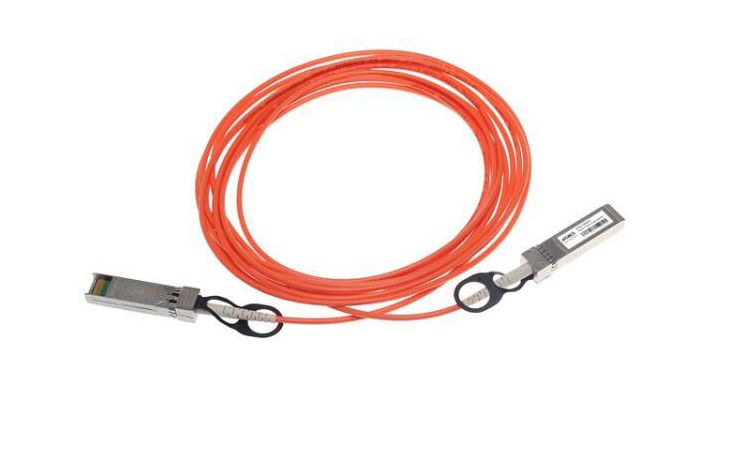
A:Yes, Walsun appliances support a passive DAC in release 10.5 and later.
Q:Which port must I insert the DAC into?
A:DAC is inserted into the 10G port on the appliance.
Q:Does the 1G port support a DAC?
A:No. The DAC might fit into a 1G port but is not supported.
Q:How can I order a DAC?
A:Contact your Walsun sales representative to order a DAC.
Q:Can I mix DAC and fiber transceivers on the same appliance?
A:Yes. You can mix DAC and fiber transceivers on the same appliance. Each 10G port supports both options.
Q:Can I mix SFP+ fiber and DAC in ports that are part of the same link aggregation channel?
A:No. There must be symmetry between all elements in the same link aggregation channel.
Q:Which transceivers use the MPO type connector?
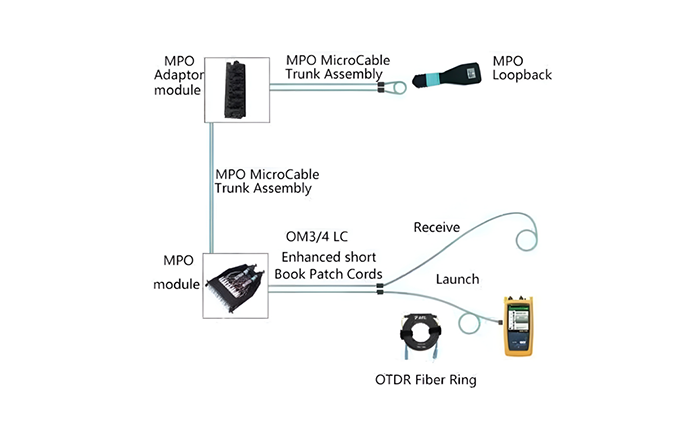
A:Only 40G QSFP+ SR4 transceiver and 100G QSFP28 SR4 transceivers use the MPO type connector. All other fiber transceivers use the LC type connector.
Q:Are special adapters required for 25G, 50G, and 100G ports?
A 100G port can support five speeds: 10G, 25G, 40G, 50G, and 100G. 1G speed is not supported on the 100G port. 50G and 100G ports use the same transceiver. The appliance determines the speed, and not the port.
Only 50G/100G (QSFP28) and 40G (QSFP+) transceivers can be directly used on a QSFP28 interface. Use a QSA28 adapter on a QSFP28 interface to use 10G (SFP+) and 25G (SFP28) transceivers.
Related Article:
SFP-CWGE27-80C 1.25G CWDM SFP 1270nm 80km LC SMF DDM Transceiver Module
TRENDnet TEG-MGBS10 Compatible 1000Base LX SFP 1310nm 10km LC SMF DDM Transceiver Module
SFP-GE35-2BX20 1000Base 2 Channels BX BIDI CSFP TX1310nm-RX1550nm 20km LC SMF DDM Transceiver Module
SFP-GE55-ZX 1000Base SFP ZX 1550nm 80km LC SMF DDM Transceiver Module
SFP-DWGE17-120C 1.25G DWDM SFP C17 100GHz 1563.86nm 120km LC SMF DDM Transceiver Module