In the fast-paced world of telecommunications, the backbone of modern networking lies in the efficient transmission of data. Fiber optics, with their unparalleled speed and bandwidth capabilities, have become the gold standard for data transmission. Within this realm, two primary types of fiber optics dominate: multimode fiber (MMF) and single mode fiber (SMF). But as technology advances and network demands evolve, the question arises: Can you convert multimode fiber to single mode fiber?
Table of Contents
ToggleUnderstanding the Basics
Before delving into the complexities of conversion, it’s crucial to understand the fundamental differences between multimode and single mode fibers. Multimode fiber is designed to carry multiple light modes simultaneously, with each mode traveling at different paths. This is facilitated by a larger core diameter, typically 50 or 62.5 micrometers, which allows for more data to pass through but over shorter distances due to modal dispersion. It is commonly used in short-range communication, such as within data centers or local area networks (LANs).
On the other hand, single mode fiber has a much smaller core diameter, around 8 to 10 micrometers, allowing only a single light mode to pass through. This minimizes dispersion and attenuation, enabling data transmission over much longer distances and at higher bandwidths. SMF is the preferred choice for long-haul communication, such as in telecommunications networks and metropolitan area networks (MANs).
The Challenge of Conversion
The primary challenge in converting multimode fiber to single mode fiber lies in their core diameters and modal properties. The larger core of multimode fiber cannot simply be reduced to match the smaller core of single mode fiber without significant signal loss and degradation. Additionally, the light propagation mechanisms differ greatly between the two, further complicating direct conversion.
Several potential methods and technologies have been explored to address this challenge:
Mode Conditioning Patch Cables: One approach is using mode conditioning patch cables, which are designed to adjust the launch condition of the multimode signal into a single mode fiber. This method, however, is not a true conversion but rather a compatibility solution to mitigate issues at the connection points between MMF and SMF.
Optical Mode Converters: Optical mode converters are specialized devices that can transform the multimode signal into a single mode signal. These converters use complex optical techniques to reshape and reformat the light modes. While promising, this technology is still in development stages and often requires precise alignment and calibration.
Wavelength Division Multiplexing (WDM): Another technique is employing WDM systems, which can transmit multiple signals over different wavelengths through the same fiber. By integrating WDM with mode conversion technologies, it may be possible to achieve a functional conversion. However, this adds layers of complexity and cost to the network infrastructure.
Practical Considerations
Despite these potential methods, practical implementation of multimode to single mode conversion remains challenging and costly. Network operators and IT professionals must weigh the benefits against the significant investment in time, resources, and technology. Often, it is more feasible to upgrade the existing network infrastructure with new fiber installations rather than attempting conversions.
Moreover, the reliability and performance of converted fiber links may not meet the stringent requirements of high-speed data transmission. Therefore, careful planning and analysis are essential before pursuing any conversion strategy.
Future Prospects and Innovations
As the demand for higher bandwidth and faster data rates continues to surge, the need for efficient fiber optic solutions becomes more pressing. While converting multimode fiber to single mode fiber presents numerous challenges, ongoing research and innovation in fiber optics offer hope for future breakthroughs.
Emerging Technologies
One promising area of research is the development of advanced optical fibers with hybrid properties, capable of supporting both multimode and single mode transmission. These fibers aim to combine the best of both worlds, offering the high bandwidth and long-distance capabilities of SMF with the versatility and cost-effectiveness of MMF.
Few-Mode Fibers (FMFs): Few-mode fibers are an emerging technology that supports a limited number of propagation modes, striking a balance between multimode and single mode fibers. These fibers can potentially facilitate easier conversion processes by reducing modal dispersion while maintaining higher data capacity.
Multicore Fibers (MCFs): Another innovation is multicore fibers, which contain multiple cores within a single cladding. Each core can operate in single mode, allowing for parallel data transmission. By leveraging MCFs, network designers could create more efficient and scalable fiber networks that simplify the transition from multimode to single mode.
Practical Steps Forward
For organizations and network operators considering the transition from multimode to single mode fiber, several practical steps can be taken to ease the process:
Infrastructure Assessment: Conduct a thorough assessment of the existing fiber infrastructure to determine the feasibility of conversion. Identify critical segments where upgrading to single mode fiber would yield the most significant benefits.
Hybrid Solutions: Implement hybrid networking solutions that utilize both multimode and single mode fibers. This approach allows for gradual transition and optimization of network performance without extensive overhauls.
Training and Expertise: Invest in training and development for IT staff and network engineers to stay abreast of the latest fiber optic technologies and conversion techniques. Building expertise within the team can lead to more informed decision-making and effective implementation of new solutions.
Vendor Collaboration: Collaborate with fiber optic equipment vendors and service providers to explore customized solutions tailored to specific network requirements. Vendors often have access to cutting-edge technologies and can offer valuable insights into the best practices for fiber conversion.
Conclusion
The question of whether you can convert multimode fiber to single mode fiber is complex, with no straightforward answer. While theoretical and experimental approaches offer potential pathways, practical implementation remains fraught with challenges. The significant differences in core diameters, light propagation mechanisms, and performance characteristics of MMF and SMF make direct conversion difficult and often impractical.
However, with continuous advancements in fiber optic technology and innovative solutions on the horizon, the future holds promise for more seamless and efficient transitions. For now, network operators must carefully evaluate their needs, explore hybrid solutions, and stay informed about emerging technologies to navigate the evolving landscape of fiber optics effectively. The journey from multimode to single mode fiber may be intricate, but with strategic planning and forward-thinking, it is a journey worth undertaking for the promise of faster, more reliable data transmission.
By understanding the intricacies and potential solutions, stakeholders in the telecommunications industry can make informed decisions about their network infrastructure, ensuring they are prepared for the demands of tomorrow’s digital world.
Frequently Asked Questions
Q:Can 1G SFP work with 10G SFP
A:Yes, technically, a 1G SFP can physically fit into a 10G SFP port, but it will not work as intended. The mismatch in data rates will likely result in communication errors, link instability, and degraded network performance. Mixing different SFP speeds can lead to potential issues such as data packet loss, increased latency, and network congestion.
To address these issues when mixing 1G and 10G SFPs, it is recommended to use media converters or rate-selectable SFP modules that can adapt to different speeds. These devices can help bridge the gap between different SFP speeds and ensure compatibility within the network.
From a current perspective, with the advancement of technology and the widespread adoption of higher network speeds, it is becoming increasingly important to maintain uniformity in SFP speeds to optimize network performance and reliability. Therefore, it is advisable to avoid mixing 1G and 10G SFPs whenever possible to prevent potential compatibility issues and ensure seamless network operation.
Q:Do Walsun appliances support direct attach cable (DAC)?
A:Yes, Walsun appliances support a passive DAC in release 10.5 and later.
Q:Which port must I insert the DAC into?
A:DAC is inserted into the 10G port on the appliance.
Q:Does the 1G port support a DAC?
A:No. The DAC might fit into a 1G port but is not supported.
Q:How can I order a DAC?
A:Contact your Walsun sales representative to order a DAC.
Q:Can I mix DAC and fiber transceivers on the same appliance?
A:Yes. You can mix DAC and fiber transceivers on the same appliance. Each 10G port supports both options.
Q:Can I mix SFP+ fiber and DAC in ports that are part of the same link aggregation channel?
A:No. There must be symmetry between all elements in the same link aggregation channel.
Q:Which transceivers use the MPO type connector?
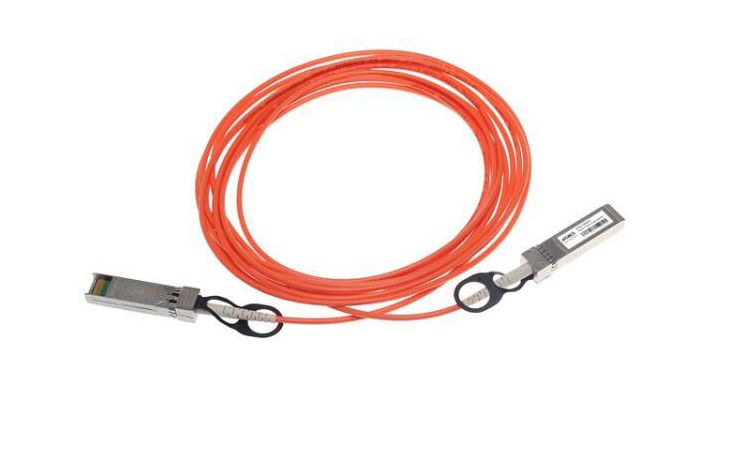
A:Only 40G QSFP+ SR4 transceiver and 100G QSFP28 SR4 transceivers use the MPO type connector. All other fiber transceivers use the LC type connector.
Q:Are special adapters required for 25G, 50G, and 100G ports?
A 100G port can support five speeds: 10G, 25G, 40G, 50G, and 100G. 1G speed is not supported on the 100G port. 50G and 100G ports use the same transceiver. The appliance determines the speed, and not the port.
Only 50G/100G (QSFP28) and 40G (QSFP+) transceivers can be directly used on a QSFP28 interface. Use a QSA28 adapter on a QSFP28 interface to use 10G (SFP+) and 25G (SFP28) transceivers.
Related Article:
SFP-CWGE27-80C 1.25G CWDM SFP 1270nm 80km LC SMF DDM Transceiver Module
TRENDnet TEG-MGBS10 Compatible 1000Base LX SFP 1310nm 10km LC SMF DDM Transceiver Module
SFP-GE35-2BX20 1000Base 2 Channels BX BIDI CSFP TX1310nm-RX1550nm 20km LC SMF DDM Transceiver Module
SFP-GE55-ZX 1000Base SFP ZX 1550nm 80km LC SMF DDM Transceiver Module
SFP-DWGE17-120C 1.25G DWDM SFP C17 100GHz 1563.86nm 120km LC SMF DDM Transceiver Module